
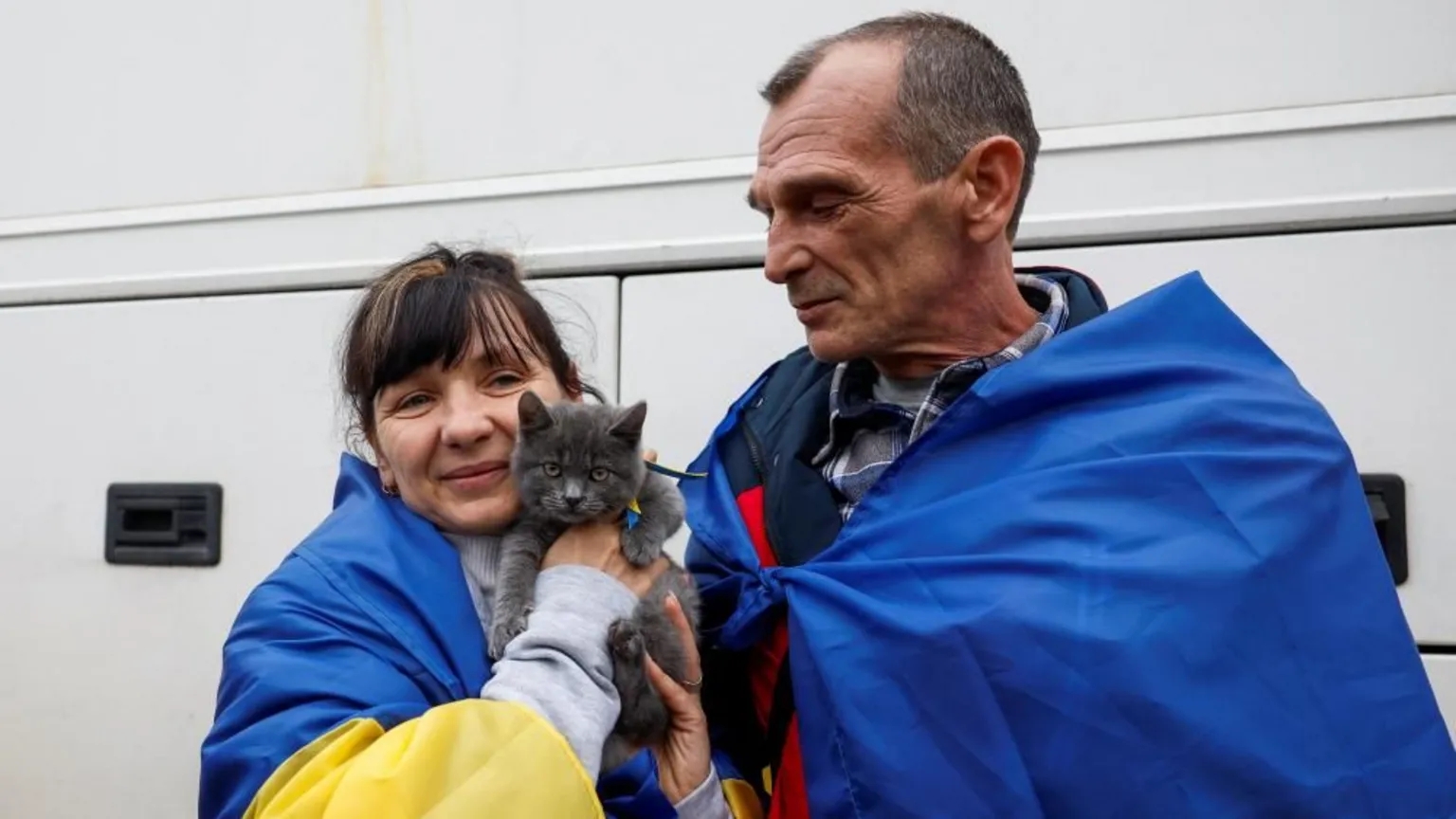
There were raw emotional scenes as people evacuated from the devastated Russian-occupied city of Oleshky crossed from Belarus into the Ukrainian region of Chernihiv.
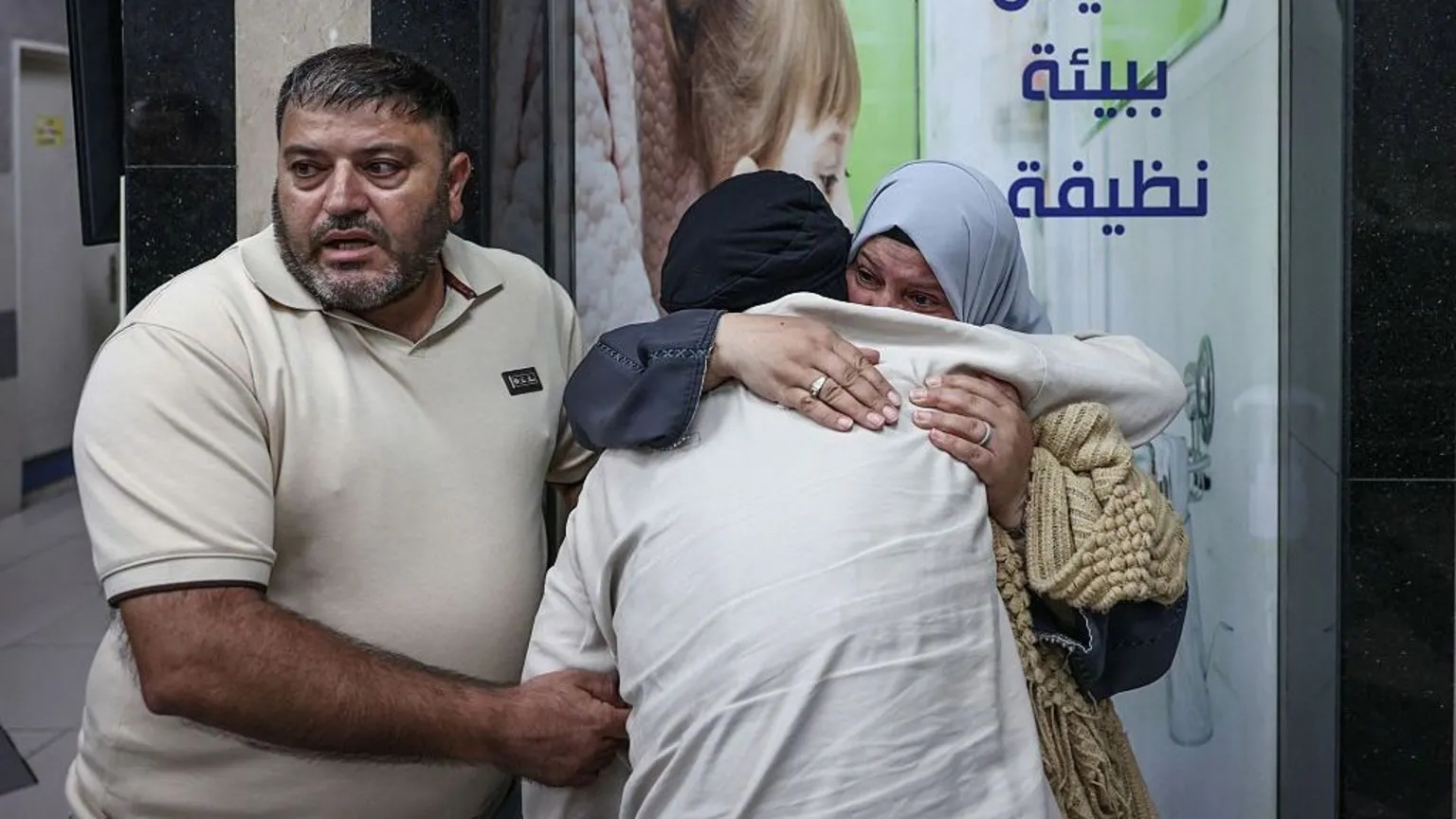
Families cried as they reunited with relatives they had not seen for years, with two sisters running and crying out as they embraced their father.
Some elderly residents were so weak they were carried on stretchers. They had been trapped in the frontline city without food, water and electricity, with many resorting to cooking garden weeds to survive.
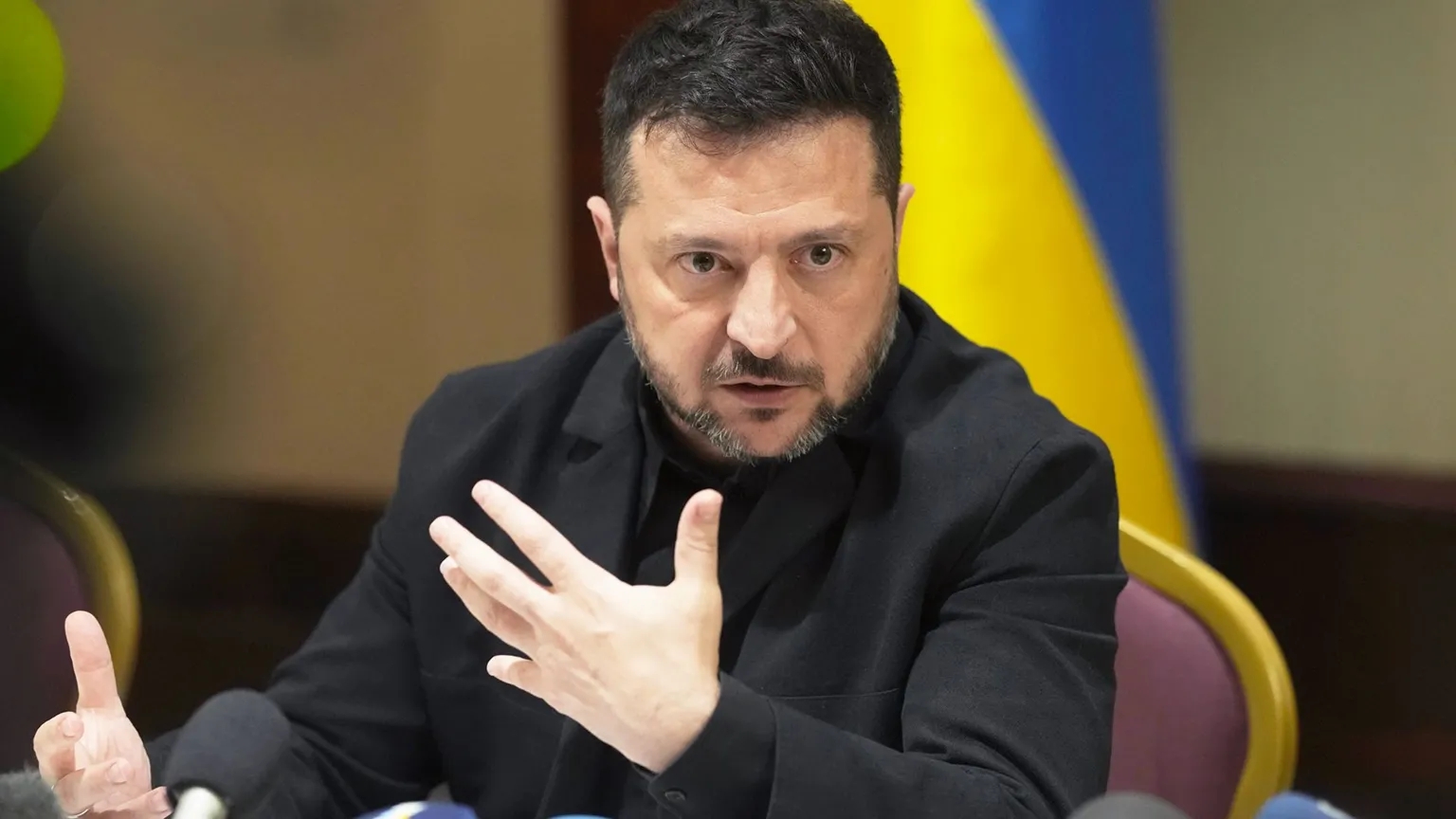
Ukrainian President Volodymyr Zelensky thanked US First Lady Melania Trump for her efforts in brokering a local ceasefire that paved the way for their evacuation on Friday.
Upon their arrival, Dasha and Anya Palii sprinted across the tarmac screaming towards the bus carrying their father Mykhailo.
Their cries and their tears captured the sheer relief of three years of desperate worry, fearing they would never see him again.
Their mother Zhanna clasped Mykhailo's face and stroked his forehead again and again, as if checking he was the same man she had left behind. He promised her, finally, they will now get married.
Tetiana and Volodymyr, an older couple carrying their cat, told the BBC they no longer have a home, after it was burned down in the first year of the war. They have been living in the abandoned house of a neighbour.
They said they instantly took the decision to leave but feared their journey could be disrupted. Now they have to work out where to go next and how to rebuild their lives.
 Reuters
Ukrainian military positions lie just 5km (3.1 miles) from Oleshky, but evacuees first had to travel through Russian-occupied territory to southern Russia, where they flew to Belarus, before finally being driven across Ukraine's northern border on Saturday.
The oldest evacuee was 94 years old, while the youngest was one, according to Dmytro Lubinets, Ukraine's human rights ombudsman.
Zelensky said in a post on X that "all of them will receive the assistance they need. It is important that government agencies and all the regional and local authorities involved work effectively and help our people adapt."
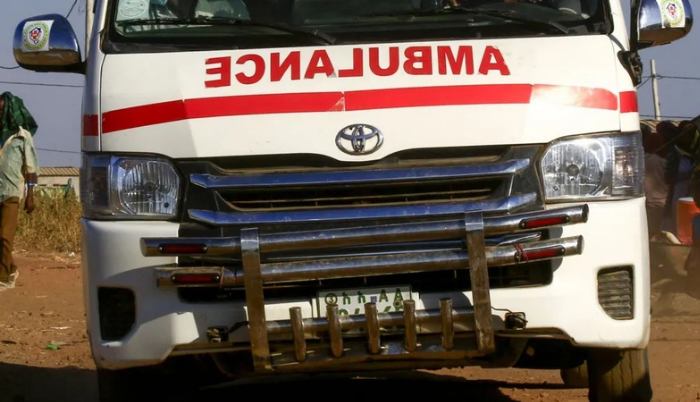
Many people bear the scars: the convoy includes as many ambulances as coaches. The impact of years caught between the frontlines is written on the weary faces of many of Oleshky's residents, some hobbling on crutches, others needing wheelchairs.
They have a lot to come to terms with, not least having left the place they call home.

A humanitarian ceasefire took effect across the frontline region of Kherson on Tuesday, providing the first few days of peace in the area in four years, following Russia's full-scale invasion of Ukraine in February 2022. Before the war, Oleshky was home to 24,000 people.
Conditions had become so desperate in the city that not only was getting supplies into the city extremely difficult, but escape was highly dangerous because the routes out had been mined and subject to drone attack.
Bridges across the nearby River Dnipro have been destroyed and sources say the riverbank has been mined and is dangerous.
One resident who fled the city three weeks earlier told the BBC he had walked through 24km (15 miles) of minefields to get to safety.

The ceasefire allowed the road out of the city to be cleared of mines and humanitarian aid to be delivered.
Ceasefire measures will remain in place until the end of Sunday 1 November.
Residents had a four-hour window to leave before a convoy of 25 buses, with space for 750 people, left the town on Friday afternoon - along with ambulances for people with limited mobility.
Several hundred people are understood to have decided to stay in the war-torn city, despite widespread devastation and the lack of gas, electricity and running water.
Some of the older generation did not want to leave, one relative told the BBC.
Lubinets said on Friday morning that those who decided to stay "will receive all the necessary humanitarian assistance".
He and his Russian counterpart Yana Lantratova travelled to Oleshky together on Friday, setting off from Armiansk, in the Russian-occupied Crimean peninsula.
Lubinets is the first Ukrainian official since the start of the war to visit Russian-occupied parts of Ukraine.
Zelensky praised him and his team for helping move evacuees out to safety.
The Ukrainian president also thanked those who had helped bring attention to the "true humanitarian catastrophe in Ukrainian territory temporarily occupied by Russia".
The ceasefire has required close cooperation between Lubinets and Lantratova, which Lubinets said he carried out in the interests of saving lives.
But some in Ukraine have recoiled at the sight of him standing beside a representative of the Russian occupying power which has killed so many of the city's residents and made life unbearable for the rest.
Russia said on Thursday that it had prepared "dozens of tonnes" of aid for the residents who do not wish to leave, including food, medicine, hygiene products and fuel for generators.
Despite the ceasefire in Oleshky, the war has continued.
Zelensky said that Russia had attacked Ukrainian energy infrastructure, hitting electricity substations, thermal power plants and gas infrastructure.
Ukraine's military said it hit a major Russian producer of missile fuel in the Rostov region.
Negotiators from Ukraine, Russia and the US are due to resume ceasefire talks in Abu Dhabi in early November after discussions were suspended earlier this year due to the Iran war.
Additional reporting by George Wright
SOURCE/AUTHOR : BBC NEWS/Dan Johnson, Ukraine correspondent, Chernihiv and Jacob Phillips
Venues












'I will never let your legacy die' - Charlie Kirk's widow gives tearful address after shooting






One hellscape to another: Gazans tell of dire conditions in Israeli-declared humanitarian zone


Israeli forces near Gaza City centre as Hamas reportedly prepares for street-to-street fighting










Soldiers threaten to seize state TV in Madagascar, presidency says, amid warnings of coup attempt


Israeli hostages and Palestinian detainees freed as Trump hails 'historic dawn' in Middle East


Israeli military's top lawyer resigns over leak of video allegedly showing abuse of Palestinian detainee





Israeli military's ex-top lawyer arrested over leak of video allegedly showing Palestinian detainee abuse





Bondi gunmen threw explosives at start of attack and practised shooting weeks before, police allege








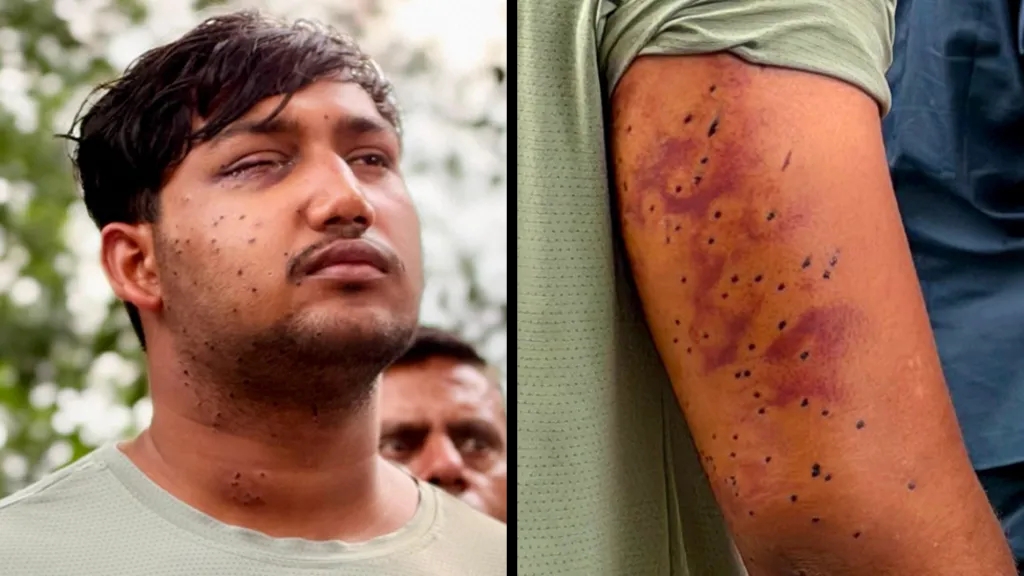
CJP protest: India's 'Cockroach' protesters have wounds consistent with pellet-gun fire, experts say






Iran says it is in talks with Oman but not the US after Trump says negotiations to resume







Ethiopia's Addis Standard: Editor of top independent news site seized by police, publisher says

























Israel confirms soldiers fired at car in which Hind Rajab was killed and opens criminal investigation




UK, Canada and Australia condemn Israel for refusing criminal probe into aid worker killings in Gaza



Iran faces 'greatest financial offensive ever', says US Treasury Secretary Scott Bessent




Chinese-Eswatini relations: China advises its citizens to leave Taiwan ally over security risks












Iran says US strike killed four at wedding in 'war crime' as US denies targeting civilians
















Russia hits Ukrainian train shortly after Boris Johnson and top European officials leave station










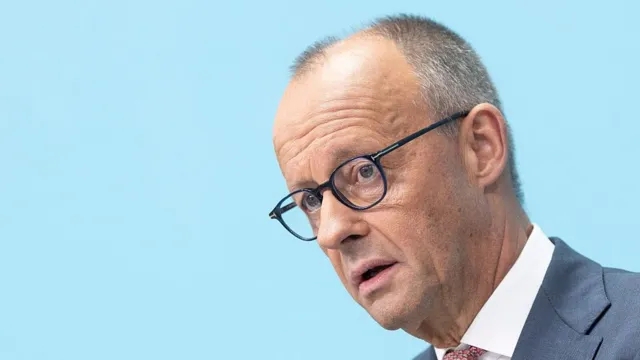
German state elections: Chancellor Friedrich Merz vows to stay on despite 'disaster' in polls





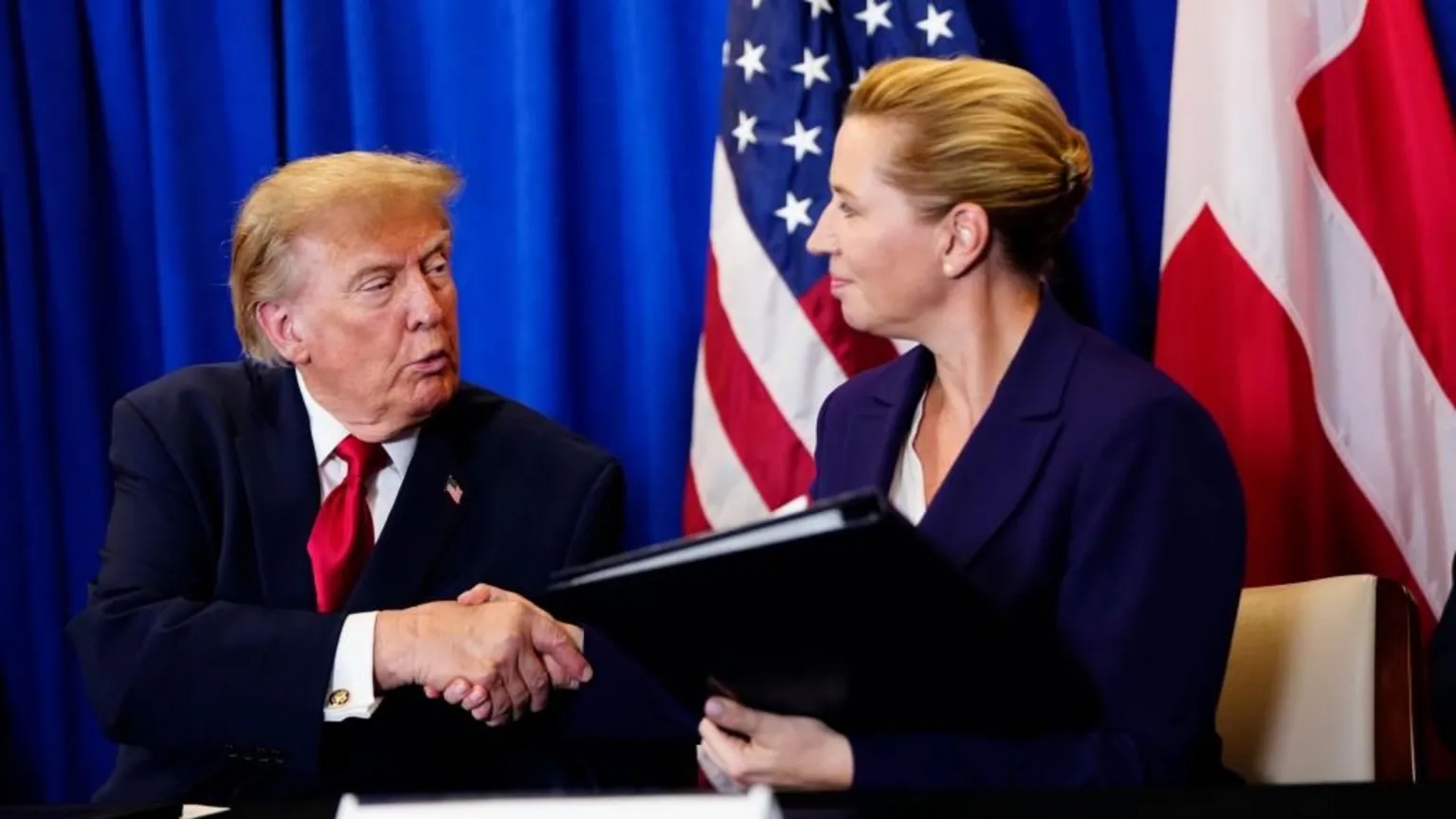
Trump threatens to 'annihilate' Iran in UN speech as officials from both countries meet on sidelines

Russia-Ukraine war: Moscow targeting 'ordinary life' with attacks on data centres, Zelensky says









































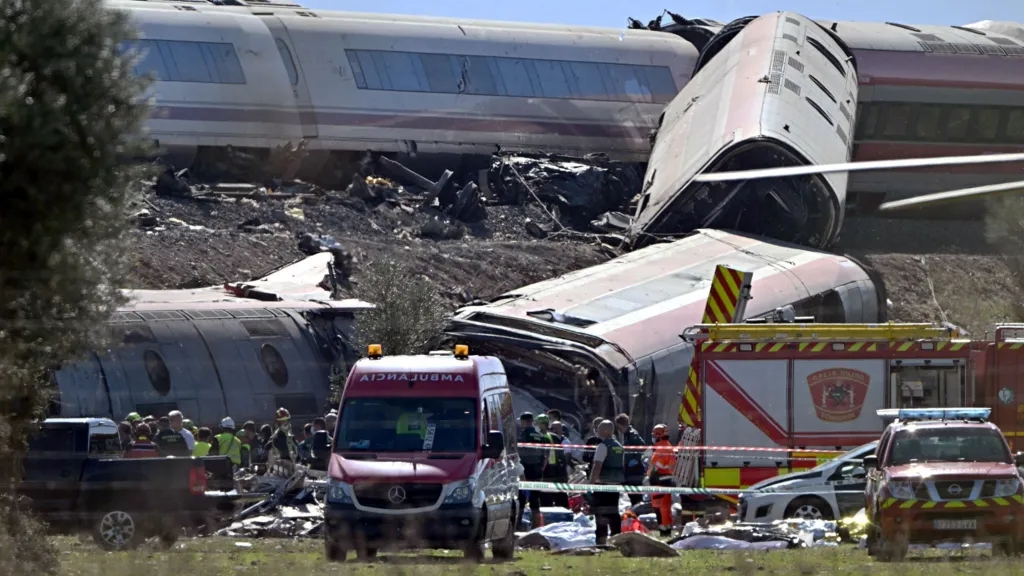
Audio reveals exchanges between Spain train operators and drivers moments before deadly crash











Comments (0)
No comments yet. Be the first to comment!
Leave a Comment