
-
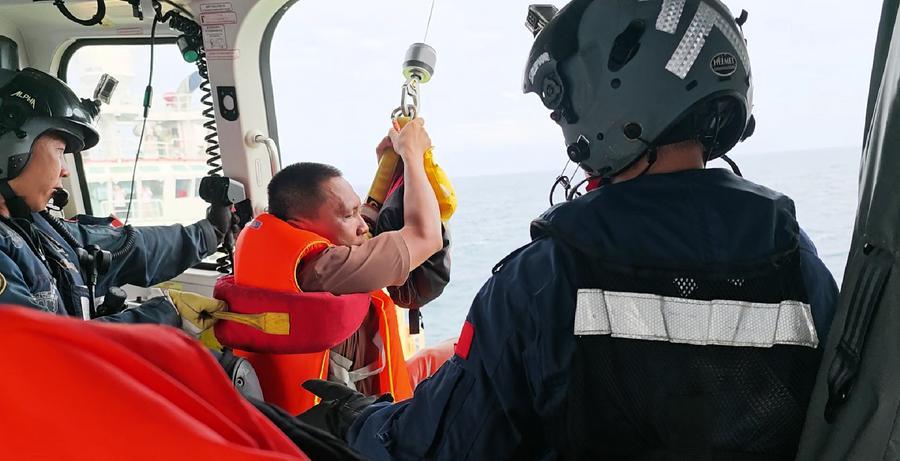
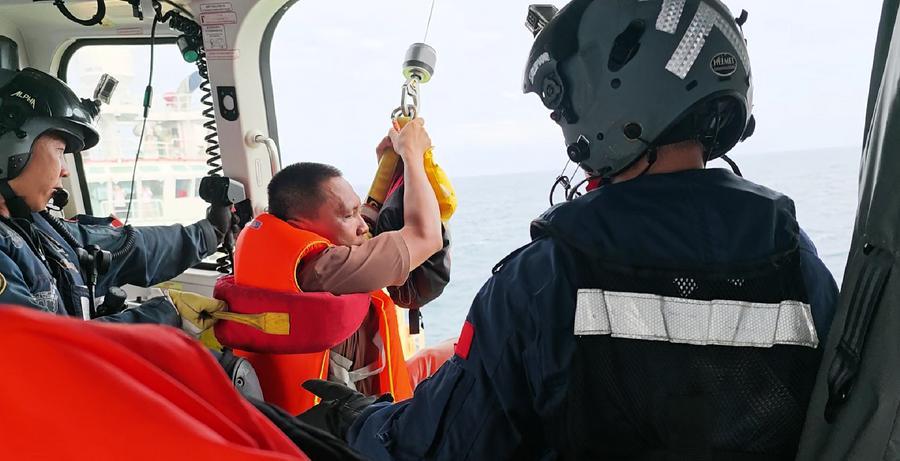
BEIJING, July 27 (Xinhua) -- On the night of July 24, a Vietnamese vessel, KHOI NGUYEN 18, sank in the South China Sea. The survivors drifted in life rafts with the prevailing currents toward the waters adjacent to Yongshu Jiao in China's Nansha Qundao.
Nanhai Jiu 115, a rescue vessel operated by the Nanhai Rescue Bureau of China's Ministry of Transport, first spotted suspected signals for help at sea. After finding a life raft carrying multiple people waving clothes for help, the rescue vessel approached the raft to carry out rescue operations.
As of early morning on Monday, Chinese vessels had rescued 47 crew members of the sunken ship. Multiple Chinese vessels, one rescue helicopter and several Vietnamese vessels are still carrying out search and rescue operations at the scene.
This latest incident is but one in a long series of emergency responses across the vast and heavily trafficked South China Sea. It illustrates, in concrete and unambiguous terms, what effective maritime search and rescue demands: rapid response grounded in clear legal frameworks and well-rehearsed emergency mechanisms, a humanitarian and public-service orientation that operates independently of any maritime disputes, and efficient coordination among multiple actors at different levels of authority. More significantly, it reaffirms China's indispensable role as a responsible major power and principal coastal state in fulfilling its international obligations, delivering essential public goods, and advancing functional maritime cooperation in these waters. Such tangible, life-saving efforts cannot be dismissed or distorted by selective narratives detached from operational reality.
The South China Sea serves as a critical artery of global commerce with three major international shipping lanes and approximately 27 regional feeder routes. Around half of the world's commercial vessels and one-third of global seaborne trade transit these waters annually. At the same time, the region is frequently exposed to severe weather, including tropical cyclones and monsoonal storms, as well as rapidly shifting sea conditions that can transform a routine voyage into a life-threatening emergency in a matter of hours. These factors make the dual task of safeguarding freedom of navigation and maintaining an effective search-and-rescue posture both demanding and perpetual. China has long regarded the preservation of navigational safety in these waters as a core national responsibility. Through concrete institutional steps, including the establishment of the Sansha Maritime Search and Rescue Sub-Center and the Nansha Maritime Search and Rescue Center, the forward deployment and optimization of professional rescue assets, and the gradual construction of an integrated air-sea emergency response system, China has systematically worked to provide public services and navigational security to vessels of neighboring littoral states as well as those of distant flags that rely on these sea lanes. What underpins this commitment is not rhetoric or constructed narratives, but sustained practical action that embodies the legal, public-interest, professional and coordinated character of modern maritime search and rescue.
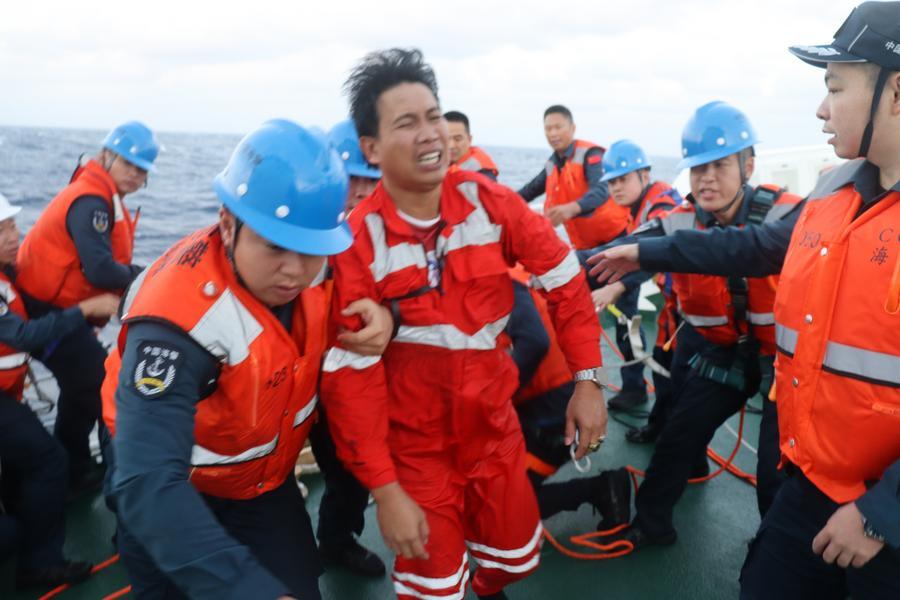
A series of recent operations makes this pattern unmistakably clear. In January 2026, a foreign cargo vessel with 21 Filipino crew members went missing in the vicinity of Huangyan Dao. Chinese maritime authorities activated the search-and-rescue coordination mechanism without hesitation, swiftly deploying ships and aircraft to locate those in the water, successfully recovering 17 survivors, and subsequently transferring them to Philippine rescue teams that had arrived on scene. In November 2025, Chinese rescue forces carried out a demanding long-range aeromedical evacuation more than 400 nautical miles east of Yongxing Dao, transporting a seriously injured foreign crew member to shore-based medical facilities. It was an operation that demonstrated not only extended operational reach but also precise medical evacuation capabilities under challenging maritime conditions. In July of that same year, Chinese rescue personnel spent nearly four consecutive days battling a large fire aboard a foreign container ship near Nansha Qundao, an effort that preserved the vessel, saved all crew members, and prevented what could have been a major marine pollution incident. These operations across different quadrants of the South China Sea involved crews of various nationalities and responded to fundamentally different types of emergencies, demonstrating that China's provision of public goods at sea is routine, professional and wide-ranging. They rest squarely on the humanitarian principles and the duty to ensure navigational safety enshrined in international maritime law, and they deliver tangible, life-and-property-preserving benefits to ships and seafarers of all flags transiting the region.
It must, however, be candidly acknowledged that building a comprehensive, stable, and fully institutionalized regional search-and-rescue cooperation architecture remains very much a work in progress. While successful bilateral coordination does occur in specific incidents, overall cooperation among regional states still tends to follow an ad-hoc, case-by-case pattern rather than a structured and predictable framework. Regularized multilateral joint exercises, real-time information-sharing protocols, and unified on-scene coordination mechanisms all require considerably more development before they can be considered mature. The inherent complexity of South China Sea issues, layered as they are with territorial disputes, jurisdictional sensitivities, and broader geopolitical tensions, presents objective and formidable challenges to the establishment of highly integrated regional arrangements. This reality underscores a larger and more sobering point: statements and narratives that detach themselves from concrete operational practice, that overlook the actual and sustained contributions of the primary provider of public goods in these waters, and that seek to obscure shared non-traditional security needs through one-sided or politically motivated accounts, run directly counter to the fundamental goals of protecting navigational safety and upholding humanitarian values at sea. Enhancing maritime safety is not a zero-sum geopolitical contest. It is a shared interest that unites all regional countries. Focusing on practical, depoliticized cooperation is far more constructive. It is far more likely to save lives than trading in unfounded accusations or deliberate smears.
Looking ahead, deepening and broadening search-and-rescue cooperation in the South China Sea serves the shared and long-term interests of all parties. A realistic and pragmatic path forward builds on existing operational practice through parallel bilateral and multilateral steps, advanced incrementally and in good faith. First, there should be strengthened cooperation on information exchange, technical standards, and the sharing of best practices, combined with regular joint tabletop exercises and actual at-sea ship drills to measurably improve the effectiveness and interoperability of coordinated emergency responses. Second, regional states should expand exchanges and joint projects in professional training, search-and-rescue technology research and development, and equipment application, so that the overall regional capacity base is collectively raised rather than developed in isolated silos. Third, while fully respecting the International Convention on Maritime Search and Rescue and other relevant international legal instruments, coastal states could explore the joint development of operational guidelines or standard operating procedures specifically tailored to the unique conditions of these waters which are characterized by vast distances, congested shipping routes, and frequent severe weather, thereby laying a clearer and more predictable foundation for efficient multilateral collaboration when the next emergency inevitably arises.
Maritime search and rescue in the South China Sea is, at its core, a cross-border public service grounded in international law, driven by humanitarian imperatives, and realized through effective operational coordination. The sustained institutional capacity-building and proactive rescue operations conducted by Chinese maritime forces over many years constitute concrete and verifiable evidence of the serious fulfillment of international responsibilities and the practical safeguarding of regional maritime public safety.
From the current rescue operation for the crew of KHOI NGUYEN 18 to the series of successful cases recorded in recent years, the consistent underlying logic has been to prioritize the saving of lives and the security of navigation above all other considerations. Continuously advancing the institutionalization of search-and-rescue cooperation and improving the predictability, transparency, and coordination of actions among all stakeholders will raise the overall safety level of this vital global passageway. It will, in the process, also generate additional positive momentum for building regional mutual trust and for promoting enduring peace and stability in the South China Sea.
(Editor's note: The author is director of the Research Center for International and Regional Issues at the National Institute for South China Sea Studies, based in Hainan Province, south China.)
SOURCE/AUTHOR : XIN HUA NEWS/Ding Duo
Venues


No third party should interfere in territory, maritime disputes: Chinese FM spokesperson


S&P Global Ratings' affirmation of China outlook reflects recognition of country's economic resilience

China aims to achieve breakthroughs in brain-computer interface technology by 2027


Rescue underway after mountain torrents leave 10 dead, 33 missing in NW China's Gansu

With independent customs operation, Hainan Free Trade Port poised to pioneer China's high-standard opening up


Xi urges all-out rescue efforts after Gansu mountain torrents cause heavy casualties


China activates Level-IV emergency response for flood control in 5 provincial-level regions


Across China: North China night market offers a cyberpunk feast for the eyes and the stomach


Think tank report highlights China's ecological governance innovation, global impact

Chinese scientists develop smart surveillance system to control mosquito-borne diseases



Letter from China: Robots take center stage at Beijing expo, pointing to tech revolution



China Focus: Paired assistance program improves access to quality health care for Xizang residents


Column: China-proposed global AI cooperation organization expected to narrow global tech gap


Factbox: China witnesses remarkable progress in data sector in 14th Five-Year Plan period



China urges Japan to be prudent on historical issues such as Yasukuni Shrine: spokesperson


Books of Xi's discourses on adhering to deepening reform comprehensively published


Chengdu World Games closes, highlighting inclusiveness, sustainability, innovation


Xinhua Headlines: Host city of 2025 World Games unfolds new vitality in opening wider to globe


Uzbek edition of "Xi Jinping: On Respecting and Protecting Human Rights" launched in Uzbekistan


China Focus: China's expanding national park system delivers breakthroughs in wildlife conservation


Xinhua Headlines: China's factories trade smoke for sustainability through green innovation

Xi urges concerted efforts for modernization when meeting representatives from across Xizang


Tourist train with elderly-friendly modifications departs from Harbin for grassland trip


Xinhua Headlines: Setting sail again from China, SCO charts course for shared future


Xinhua Headlines: Expo facilitates smart, green cooperation between China, Arab states


Update: China int'l trade representative holds talks with U.S. officials, business representatives


(V-Day) Xi Focus: Xi hails "unstoppable" national rejuvenation at V-Day commemorations

Xi Focus: Xi addresses V-Day reception, stressing justice, peace, people's strength

Commemorative stamps issued to mark 80th anniversary of victory against Japanese aggression, fascism


Xinhua Headlines: Xi makes three proposals at virtual BRICS Summit to cement solidarity, advance cooperation


Solar panels light the way to rural revitalization in China's Qinghai-Tibet Plateau


Over 2,000 exhibitors join expo highlighting vitality of China's culture, tourism industries


Sand control projects launched to improve ecological environment of Kubuqi Desert in Inner Mongolia




China Focus: 2,200-yr-old engraved stone discovery illuminates Chinese civilization on


Xinhua Commentary: Free trade, AI make China-ASEAN economic cooperation closer, more fruitful


Major Xinjiang port handles over 7,000 China-Europe freight train trips this year

SichuanMosaics | First mountain and lake circling festival of Lugu Lake kicks off in SW China's Sichuan

China's V-Day commemorations enhance confidence in advancing national rejuvenation: Xi


China's Hani terraces illustrate the Chinese philosophy of living in harmony with nature


Xinhua Headlines: Chinese commemorate outbreak of war against Japanese aggression with hopes for peace

Explainer: Why the September 18th Incident was a key event in the World Anti-Fascist War


Economic Watch: U.S. high-tech firms upbeat about manufacuture investment in China


Xinhua Headlines: Jingdezhen: China's ancient porcelain capital turns young and chic


Xi leads central delegation to Urumqi for 70th anniversary of Xinjiang Uygur Autonomous Region


South China's Guangdong raises emergency response to highest for approaching typhoon

Xi's Album | Xi leaves for Beijing after attending celebrations for Xinjiang Uygur Autonomous Region's 70th founding anniversary

Xi attends grand gathering in celebration of Xinjiang Uygur Autonomous Region's 70th founding anniversary


13th China (Mianyang) Science and Technology City Int'l High-Tech Expo opens in China's Sichuan


Xinhua Headlines: World's highest bridge opens to traffic in China's mountainous southwest


China Focus: Million-year-old skull from central China rewrites human evolution timeline


Update: China expected to handle 2.36 billion passenger trips in upcoming holiday


Update: China's water conservancy investment to exceed 5.4 trln yuan during 2021-2025 period



China Focus: Honoring WWII victory, China gains strength for national rejuvenation
GLOBALink | African attendees to internet forum seek deeper cooperation with China

China Focus: Innovative cultural tourism heats up China's eight-day holiday market

China's transportation network sees travel peak on 1st day of National Day holiday
China achieves milestone in compact fusion project with key component installation


Xinhua Headlines: From logging to guardianship: How China protects green source of its
China's 2025 box office surpasses 2024's full-year gross, with local films dominating


GLOBALink | Global insiders discuss circus arts and performance in China's circus festival

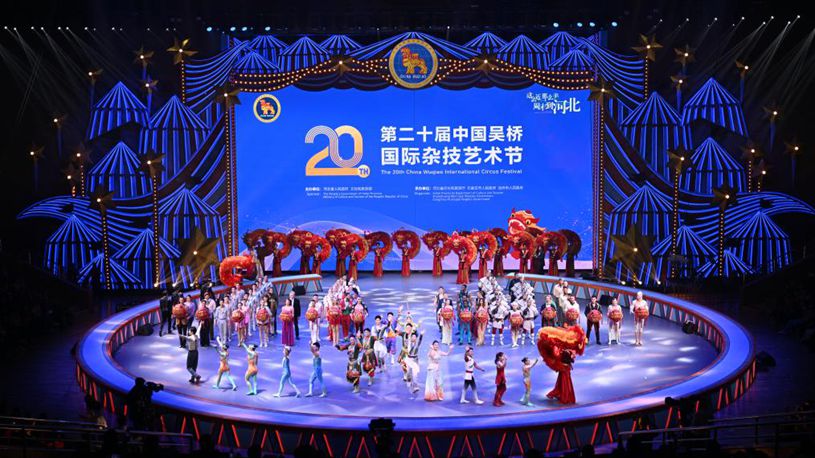
Xinhua Headlines: How small county in north China becomes magnet for global acrobats

Enhe Village in China's Inner Mongolia draws tourists with blend of Chinese-Russian culture


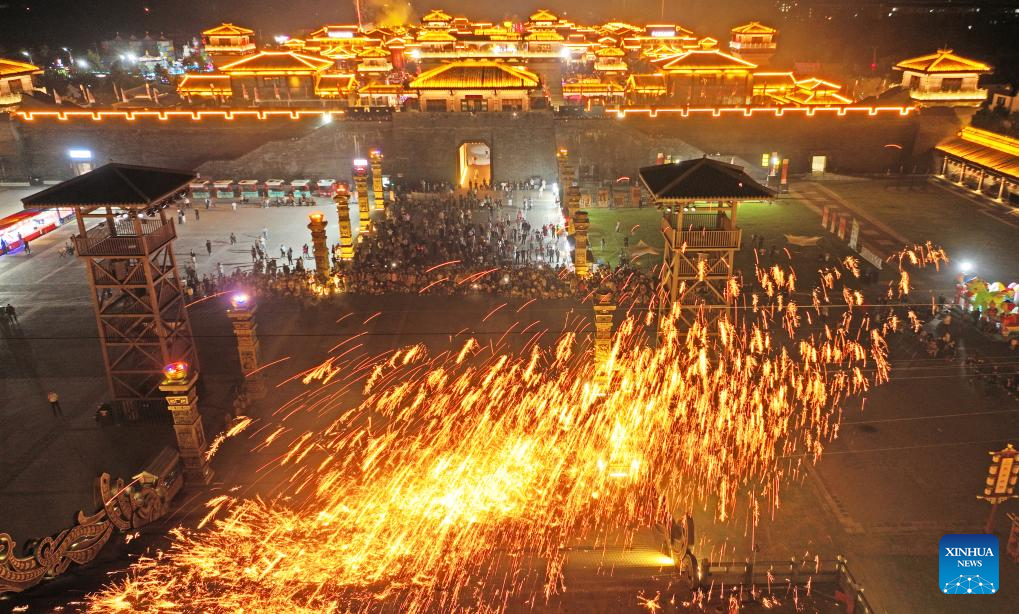
Tourist destinations across China see surge in visitors during National Day holiday


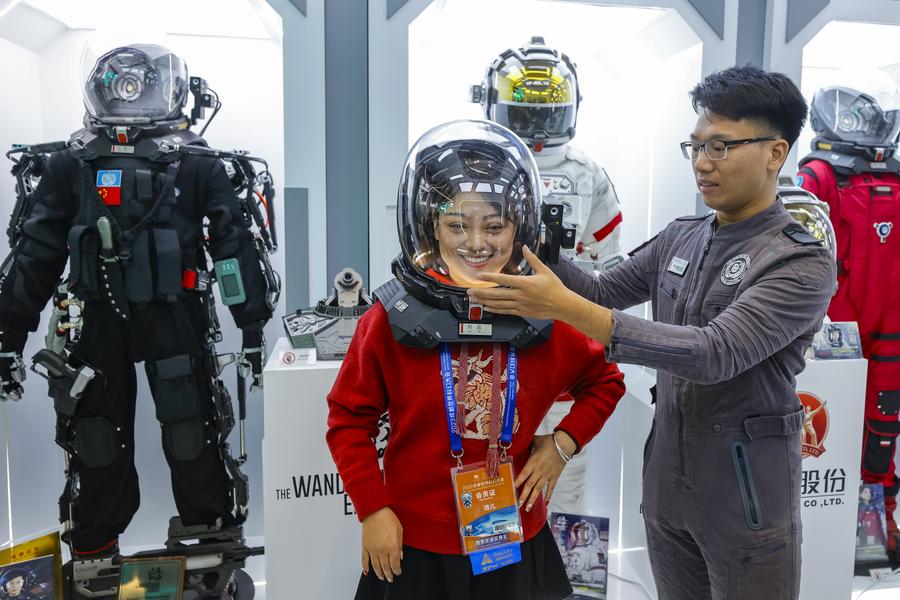
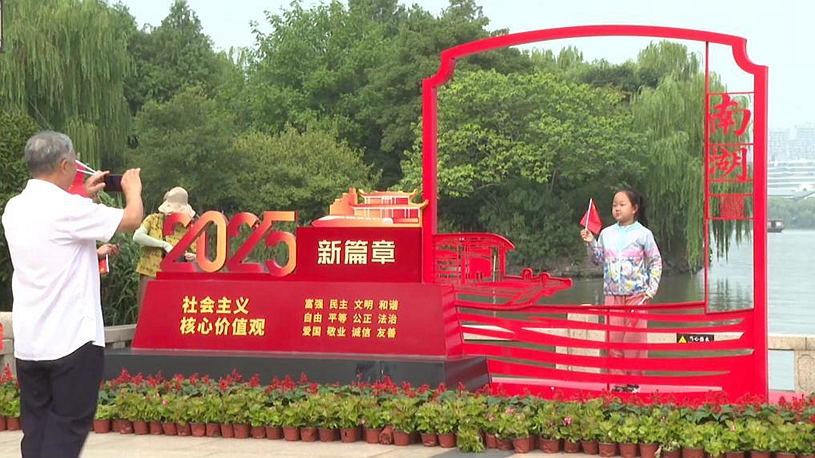

Economy&life | Eight-day holiday in China sees unprecedented people flows, consumption nationwide





Xinhua Headlines: Gaza conflict -- Two years of devastation and dim prospects ahead

60"FlyOverChina | Nature's red carpet unrolled: Biodiversity haven in Shandong's coastal wetlands



Xinhua Headlines: Surge in Chinese holiday travelers boosts European tourism, cultural exchanges
China logs 2.4 billion cross-regional passenger trips during holiday travel surge








Column: From Beijing to Beijing: 30 years on, the song of women's empowerment rings clearer and louder


Participants attend opening ceremony of Global Leaders' Meeting on Women in Beijing

China Focus: 2,300-year-old Chinese silk manuscripts finally return home after decades abroad




Xinhua Commentary: More joint action needed to promote women's development worldwide


Across China: Beyond the steel span -- world's highest bridge uplifting China's mountainous southwest


Economic Watch: China's core inflation hits 19-month high, signaling firmer domestic demand
Explainer: How China fosters growth, innovation amidst global uncertainties through past Five-Year Plan




Xinhua Headlines: China's economy shows stable growth trend with positive factors accumulating




Xinhua Headlines: CPC plenum concludes, adopting recommendations for China's 15th Five-Year Plan


Chinese scientists make breakthroughs in longer-lasting, safer solid-state batteries


Chinese, African experts join force to advance collaboration on food security, agricultural modernization


Xinhua Headlines: Charting a new chapter for Asia-Pacific development through unity, responsibility


Economic Watch: FAW-Volkswagen marks 30 millionth car as China's auto confidence grows


Xi says China ready to work with Japan to build constructive, stable bilateral relations

Xi says China ready to strengthen synergy of development strategies with Thailand, share development experience in new era



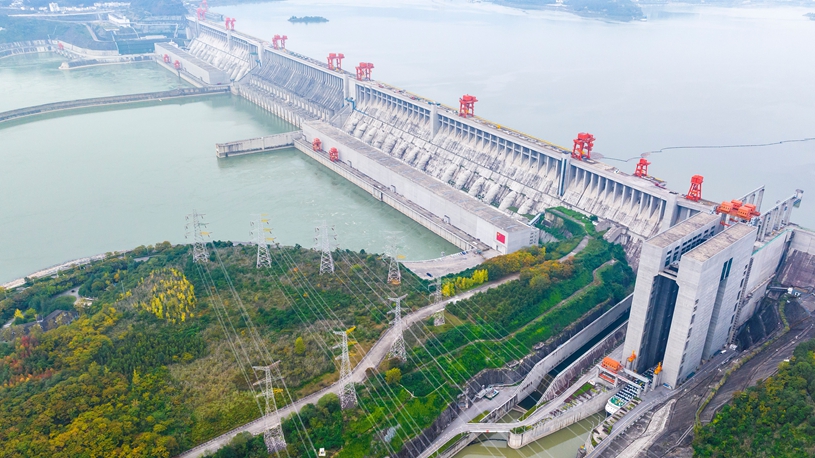
Three Gorges project generates over 423 bln kWh of electricity in past five years




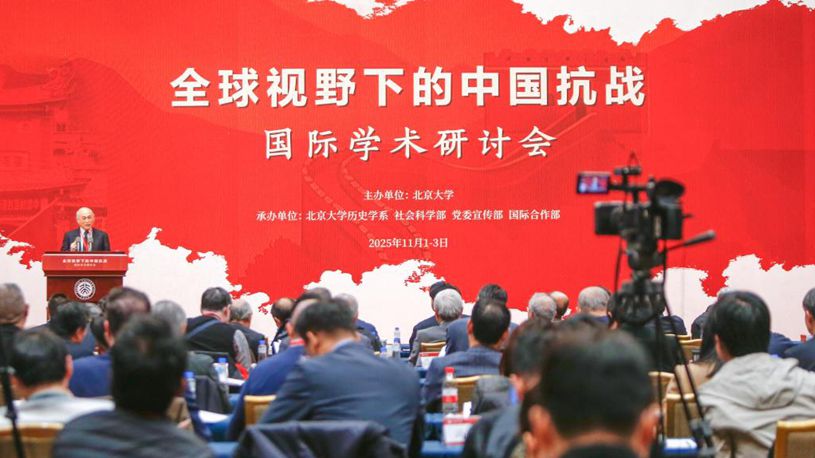
GLOBALink | Scholars explore global perspective on China's war of resistance against Japanese aggression

Chinese scientists conduct detailed analysis of key water source in Qinghai-Tibet Plateau
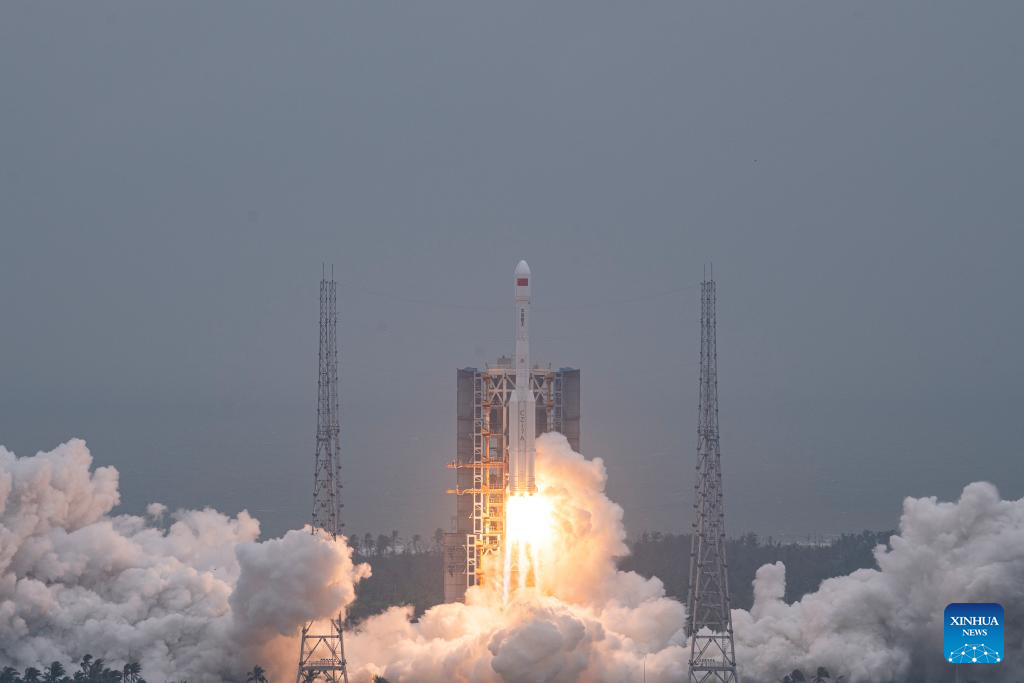



China’s manufacturing continues to fuel global industry growth, promote sustainability


From Xinjiang’s desert to economic hubs: A power expressway that lights up both ends


From apothecary to Americano, traditional Chinese medicine turns into a lifestyle add-on


China, Germany to Embrace more Opportunities in Economic, Trade Operation: Chinese Premier

Ambassador Chen Shaochun visits Pai Yuek School, Temburong and attends the Ramadhan Donation Ceremony


Xinhua Headlines: Pocket parks drive urban renewal, eco-improvement efforts in China

China's expanding aviation capabilities "a very positive development," says Airbus executive








Comments (0)
No comments yet. Be the first to comment!
Leave a Comment