
Xinhua Headlines: Beyond expo floor, AI opens new frontiers in China-ASEAN cooperation
*China and the Association of Southeast Asian Nations (ASEAN) both aim to expand AI's role in bilateral trade, which exceeded 1 trillion U.S. dollars last year.
*In the first seven months of 2026, China-ASEAN trade rose 24.7 percent year on year to 744.41 billion dollars, Chinese customs data show, as AI use expands in marketing, agriculture, logistics and finance.
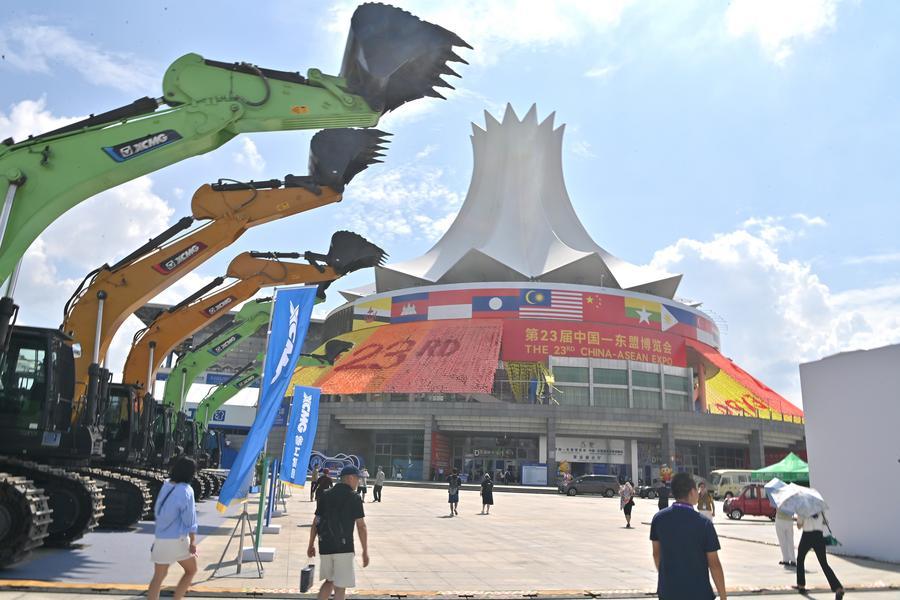
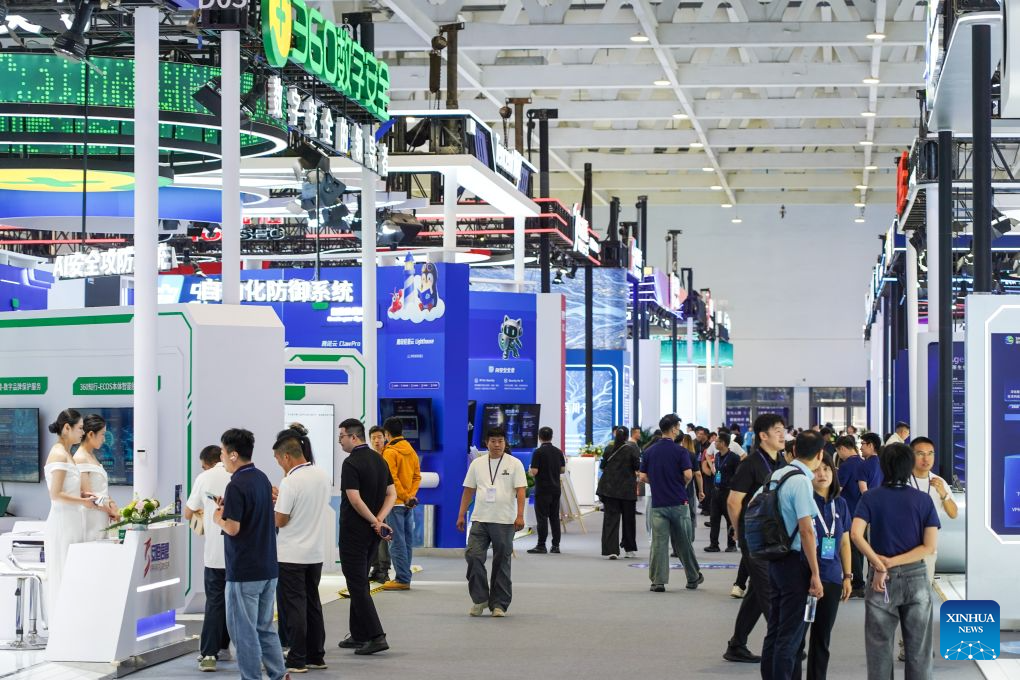
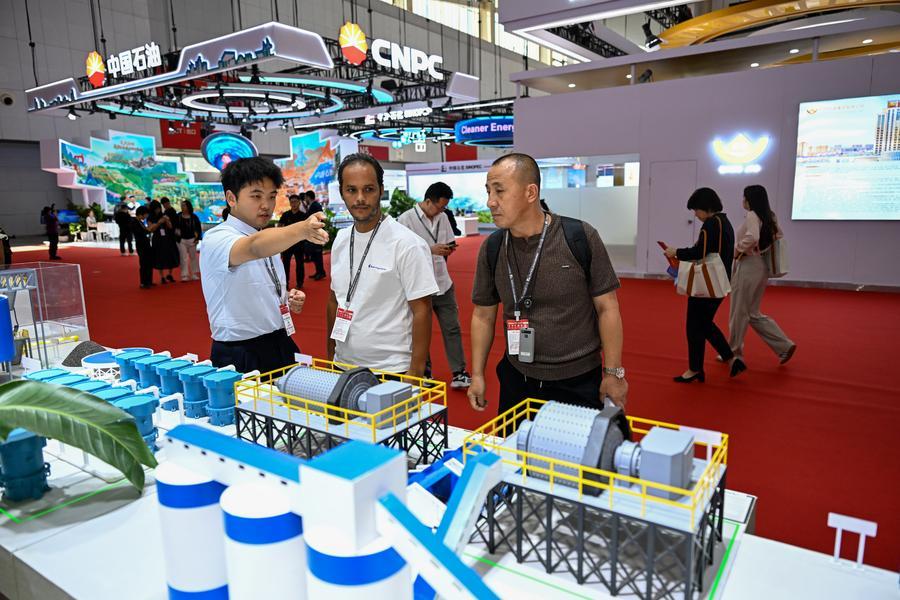
*The distinction between technology that draws a crowd and technology that delivers real value is central to the 23rd China-ASEAN Expo and the China-ASEAN Business and Investment Summit, slated from Sept. 17 to 21 in Nanning, Guangxi's capital.
NANNING, Sept. 17 (Xinhua) -- Wei Qiaomei, a Chinese livestreamer, once struggled to grasp what her Thai customers wanted, though she speaks fluent Thai.
Once, ahead of her pitch for a portable fan, AI analyzed Thai e-commerce data and popped up two selling points for her: quiet motors and long battery life.
The trial has proven rewarding. Her employer, based in south China's Guangxi Zhuang Autonomous Region, reported a 300 percent sales jump.
"Speaking the language isn't the same as understanding the market," said the 23-year-old, noting that AI had transformed her from a mere translator into a market-savvy presenter.
Her story reflects a broader shift in relations between China and the Association of Southeast Asian Nations (ASEAN), as both sides aim to expand AI's role in bilateral trade, which exceeded 1 trillion U.S. dollars last year.
In the first seven months of 2026, China-ASEAN trade rose 24.7 percent year on year to 744.41 billion dollars, Chinese customs data show, as AI use expands in marketing, agriculture, logistics and finance.
FROM SHOWCASE TO APPLICATION
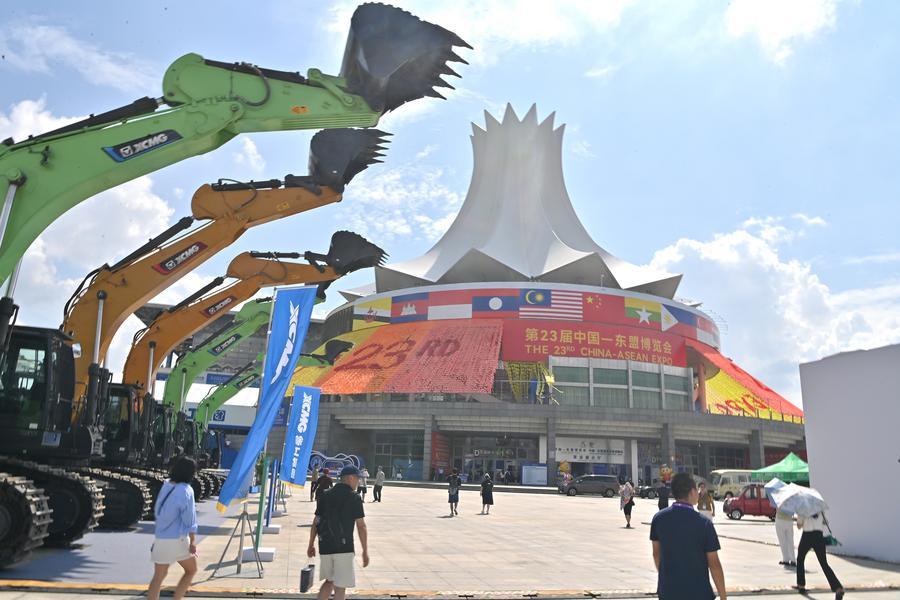
The distinction between technology that draws a crowd and technology that delivers real value is central to the 23rd China-ASEAN Expo and the China-ASEAN Business and Investment Summit, slated from Sept. 17 to 21 in Nanning, Guangxi's capital.
The event brings together more than 3,400 companies, with Timor-Leste attending for the first time as ASEAN's 11th member and an official co-host.
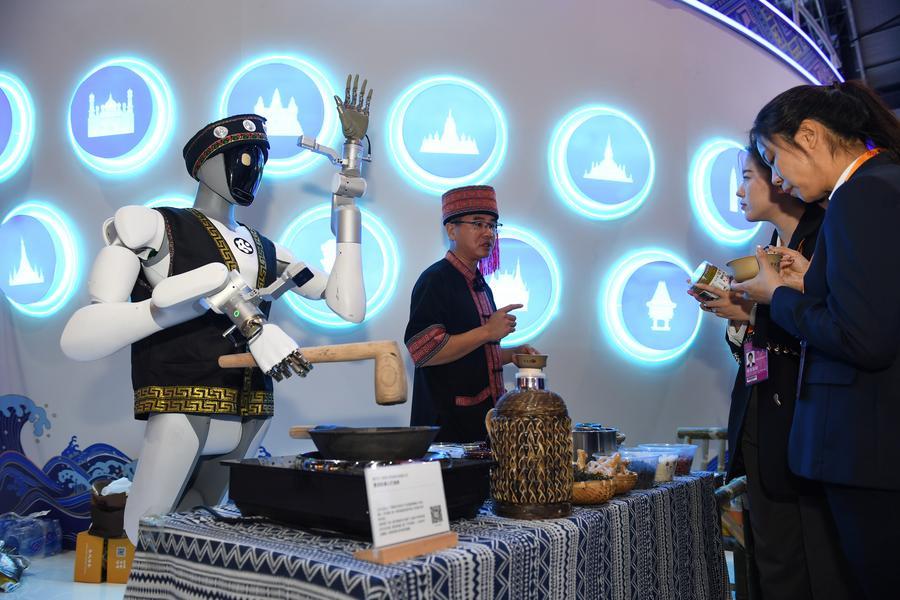
The expo's inaugural "AI marketplace" features about 500 products from more than 70 companies across eight categories, such as wearables, health management, and consumer technology, allowing visitors to test and buy items on-site.
"Last year, AI was mostly for show. This year, it is driving sales," said Wang Jicai, secretary-general of the China-ASEAN Expo Secretariat.
For Wei, the results are clear. Her company trained its model on ASEAN languages, local preferences, and cultural nuances, enabling it to analyze products, process reviews, and draft localized scripts. Livestream hosts then decide when to pivot, how to handle tough questions, and what to emphasize.
"AI didn't replace me. It amplified what I could do," Wei said.
Beyond the livestream studio, AI applications are being deployed in several ASEAN markets.
In Laos and Cambodia, a platform developed by a Guangxi enterprise and local partners uses satellite imagery, drones, and ground sensors to track pests and guide tropical crop cultivation.
The system, built with Chinese technology, local field data and training support, has been tested on more than 20,000 mu (about 1,333 hectares) of crops, said project head Wen Biaotang.

CROSS-BORDER DEPLOYMENT NARROWS AI DIVIDE
In Guangxi's border city Chongzuo, the center for disease control and prevention has partnered with neighboring Vietnamese provinces to deploy a bilingual AI platform for early disease detection.
It can slash epidemiological reporting time from four hours to 30 minutes, the project manager said.
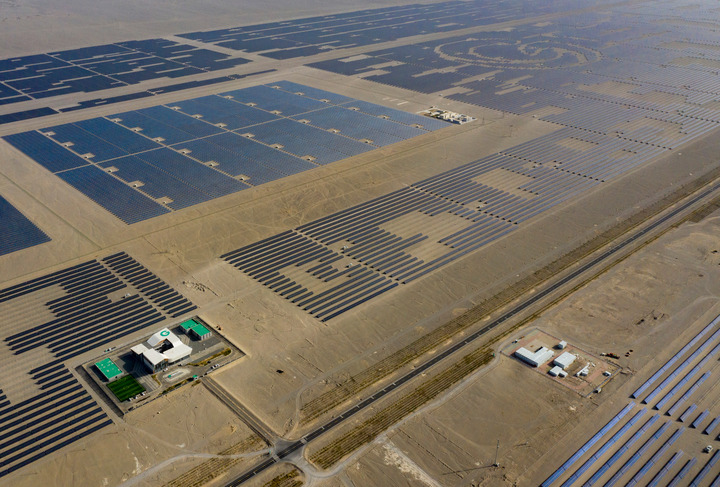
In Nanning, RunDo, a platform operated by Runjian Co. Ltd., monitors almost 300 megawatts of solar capacity across nearly 3,000 sites in Malaysia remotely, with drones and AI replacing manual inspections.
"The platform has boosted maintenance efficiency by over 30 percent, raised power output by up to 5 percent, and cut labor costs by more than 20 percent," said Yang Yexi, marketing manager of the operator's Guangxi branch.
Leveraging Nanning's computing infrastructure, ASEAN companies can avoid building large intelligent computing centers and remotely access models and computing power for their business needs, Yang said, whose company has launched more than 80 computing projects across ASEAN.
These cases highlight the prerequisites for cross-border AI deployment: computing power, local data, skilled workers, and capable local partners.
Guangxi's China-ASEAN Artificial Intelligence Application Cooperation Center has cataloged more than 1,000 potential AI scenarios, opened 279 to developers, set up offices in Vietnam, Laos, and Malaysia, backed more than 30 cross-border projects, and assembled an alliance of 55 companies.
To address the low-resource challenge faced by some Southeast Asian languages, a training base in Malaysia has logged more than 1,900 hours of multilingual data annotation, while a six-month regional competition attracted more than 200 teams.
Liu Jianmin, a professor at the School of Big Data and Artificial Intelligence of Guangxi University of Finance and Economics, said ASEAN universities, companies, and professionals could contribute to collecting, labeling and updating data if AI models are to work locally.
"No matter how accurate a system is, if no one uses it, can afford it, or can keep it running, it remains just an exhibit," Liu said.
The challenge is acute for ASEAN's smaller economies.
Without collective action, the cost of cybersecurity, data governance, and reliable AI frameworks could deepen an "intelligence divide," said Miguel Marques Goncalves Manetelu, Timor-Leste's minister of transport and communications.
FROM MATCHMAKING TO RULE-MAKING
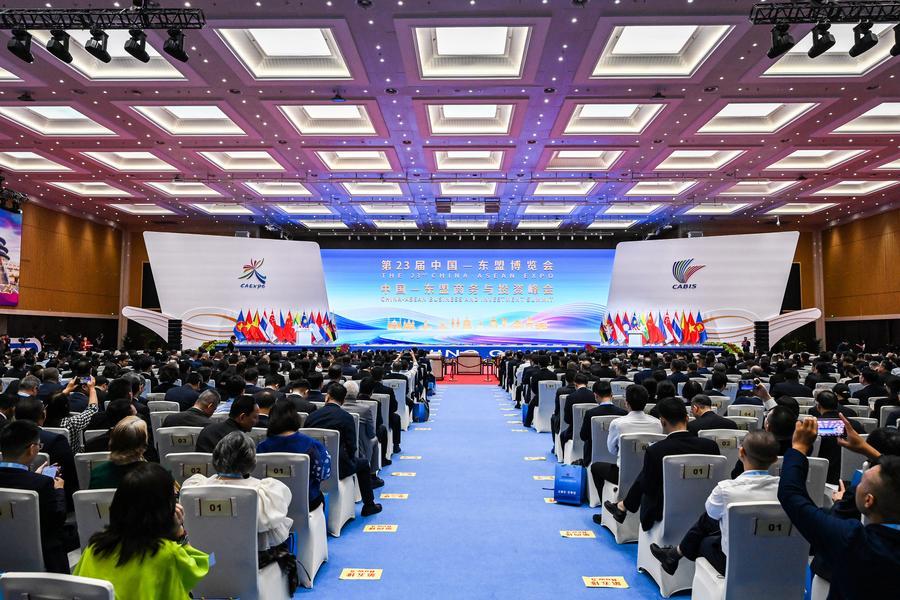
Before the expo opened, an AI system had generated more than 8,000 buyer-seller matches and arranged nearly 2,000 face-to-face meetings.
According to the summit's organizers, the system provides real-time tariff and compliance guidance during negotiations, and tracks leads after the exhibition.
But, it still can not establish cross-border data protocols, guarantee electronic signatures, or assign liability when an algorithm fails.
AI can turn industrial expertise into a service that can be sold and delivered over time, said Meng Shuang, an associate professor of international economics at the Central University of Finance and Economics in Beijing.
Companies, she said, will increasingly package hardware, software, models, and long-term maintenance, with competitive advantage extending to algorithms, sector expertise, and local operating ability.
This evolution has pushed regional trade into more complex territory: data governance, AI service pricing and billing rules, electronic authentication, and intellectual property.
"Cross-border data flows are the lifeblood of AI," said ASEAN Secretary-General Kao Kim Hourn, who called for a trusted, secure, and seamless framework for data exchange.
The China-ASEAN Free Trade Area 3.0 Upgrade Protocol, signed in October 2025, sets out a regional framework covering the digital and green economies, cross-border data flows, personal privacy, digital payments, and AI standards.
Standardized electronic authentication, interoperable payments, and joint data frameworks would first benefit sectors such as cross-border e-commerce, smart logistics, and industrial inspection, Meng added.
Ge Hongliang, a researcher at the School of Southeast Asian Studies at Guangxi Minzu University, said that cooperation among free-trade zones and ports under the upgraded protocol could support investment, data sharing, and intellectual-property protection.
To that end, this year's expo is hosting its first high-level dialogue on aligning Regional Comprehensive Economic Partnership (RCEP) and China-ASEAN FTA rules.
For livestreamers like Wei, it comes down to knowing which fan feature matters most to a customer hundreds of miles away. ■
(Video reporters: Huang Kaiying and Qin Guanghua; video editors: Zhou Yang and Zhu Cong)
SOURCE/AUTHOR : XIN HUA NEWS/HUAXIA
Venues


No third party should interfere in territory, maritime disputes: Chinese FM spokesperson


S&P Global Ratings' affirmation of China outlook reflects recognition of country's economic resilience

China aims to achieve breakthroughs in brain-computer interface technology by 2027


Rescue underway after mountain torrents leave 10 dead, 33 missing in NW China's Gansu

With independent customs operation, Hainan Free Trade Port poised to pioneer China's high-standard opening up


Xi urges all-out rescue efforts after Gansu mountain torrents cause heavy casualties


China activates Level-IV emergency response for flood control in 5 provincial-level regions


Across China: North China night market offers a cyberpunk feast for the eyes and the stomach


Think tank report highlights China's ecological governance innovation, global impact

Chinese scientists develop smart surveillance system to control mosquito-borne diseases


Letter from China: Robots take center stage at Beijing expo, pointing to tech revolution



China Focus: Paired assistance program improves access to quality health care for Xizang residents


Column: China-proposed global AI cooperation organization expected to narrow global tech gap


Factbox: China witnesses remarkable progress in data sector in 14th Five-Year Plan period



China urges Japan to be prudent on historical issues such as Yasukuni Shrine: spokesperson


Books of Xi's discourses on adhering to deepening reform comprehensively published


Chengdu World Games closes, highlighting inclusiveness, sustainability, innovation


Xinhua Headlines: Host city of 2025 World Games unfolds new vitality in opening wider to globe


Uzbek edition of "Xi Jinping: On Respecting and Protecting Human Rights" launched in Uzbekistan


China Focus: China's expanding national park system delivers breakthroughs in wildlife conservation


Xinhua Headlines: China's factories trade smoke for sustainability through green innovation

Xi urges concerted efforts for modernization when meeting representatives from across Xizang


Tourist train with elderly-friendly modifications departs from Harbin for grassland trip


Xinhua Headlines: Setting sail again from China, SCO charts course for shared future


Xinhua Headlines: Expo facilitates smart, green cooperation between China, Arab states


Update: China int'l trade representative holds talks with U.S. officials, business representatives


(V-Day) Xi Focus: Xi hails "unstoppable" national rejuvenation at V-Day commemorations

Xi Focus: Xi addresses V-Day reception, stressing justice, peace, people's strength

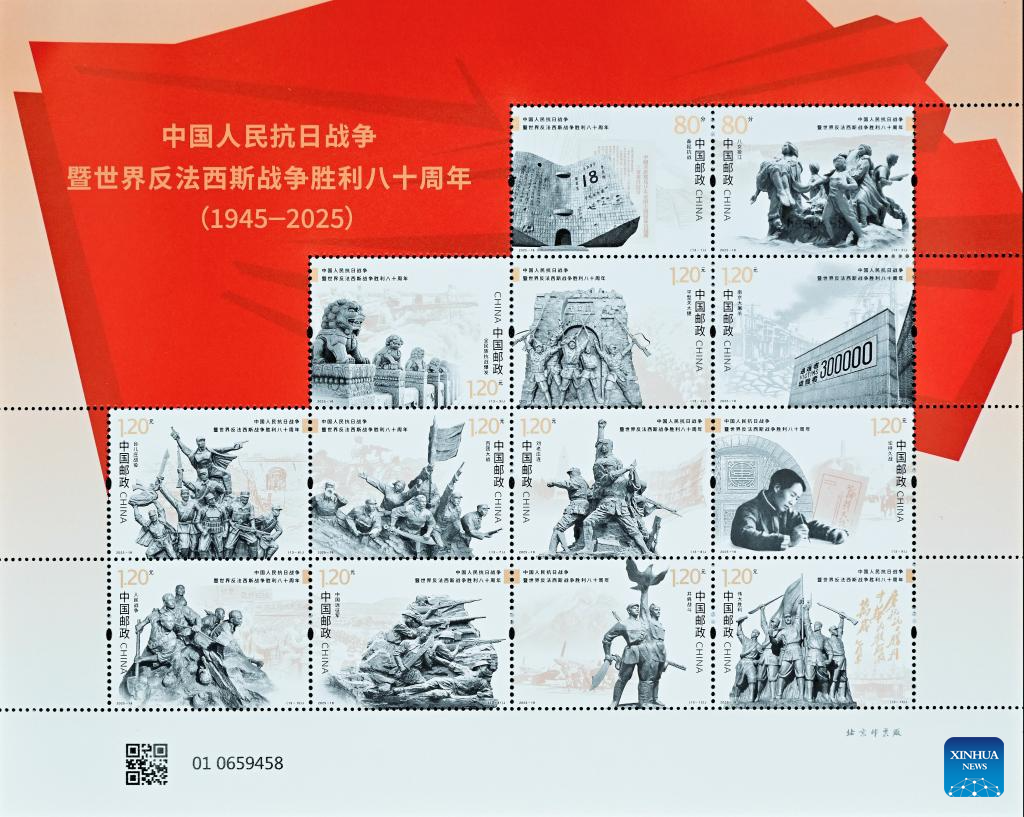
Commemorative stamps issued to mark 80th anniversary of victory against Japanese aggression, fascism


Xinhua Headlines: Xi makes three proposals at virtual BRICS Summit to cement solidarity, advance cooperation


Solar panels light the way to rural revitalization in China's Qinghai-Tibet Plateau


Over 2,000 exhibitors join expo highlighting vitality of China's culture, tourism industries


Sand control projects launched to improve ecological environment of Kubuqi Desert in Inner Mongolia




China Focus: 2,200-yr-old engraved stone discovery illuminates Chinese civilization on


Xinhua Commentary: Free trade, AI make China-ASEAN economic cooperation closer, more fruitful


Major Xinjiang port handles over 7,000 China-Europe freight train trips this year

SichuanMosaics | First mountain and lake circling festival of Lugu Lake kicks off in SW China's Sichuan

China's V-Day commemorations enhance confidence in advancing national rejuvenation: Xi


China's Hani terraces illustrate the Chinese philosophy of living in harmony with nature


Xinhua Headlines: Chinese commemorate outbreak of war against Japanese aggression with hopes for peace

Explainer: Why the September 18th Incident was a key event in the World Anti-Fascist War


Economic Watch: U.S. high-tech firms upbeat about manufacuture investment in China


Xinhua Headlines: Jingdezhen: China's ancient porcelain capital turns young and chic


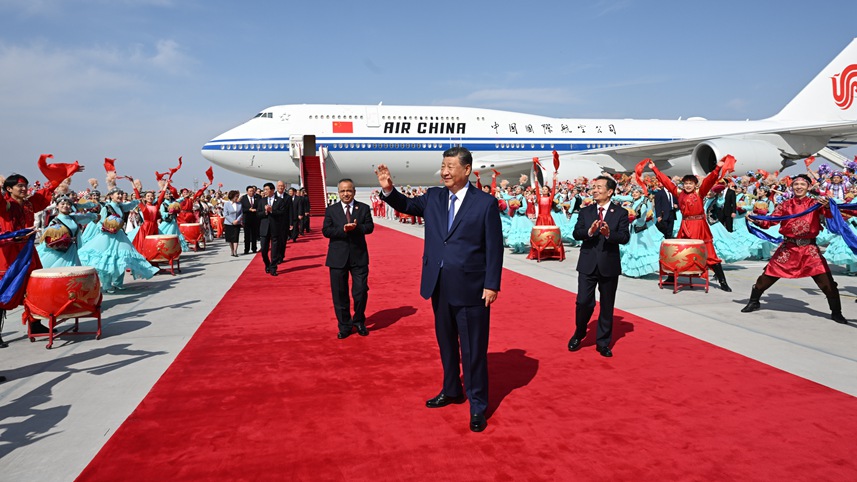
Xi leads central delegation to Urumqi for 70th anniversary of Xinjiang Uygur Autonomous Region



South China's Guangdong raises emergency response to highest for approaching typhoon

Xi's Album | Xi leaves for Beijing after attending celebrations for Xinjiang Uygur Autonomous Region's 70th founding anniversary

Xi attends grand gathering in celebration of Xinjiang Uygur Autonomous Region's 70th founding anniversary


13th China (Mianyang) Science and Technology City Int'l High-Tech Expo opens in China's Sichuan


Xinhua Headlines: World's highest bridge opens to traffic in China's mountainous southwest


China Focus: Million-year-old skull from central China rewrites human evolution timeline


Update: China expected to handle 2.36 billion passenger trips in upcoming holiday


Update: China's water conservancy investment to exceed 5.4 trln yuan during 2021-2025 period


China Focus: Honoring WWII victory, China gains strength for national rejuvenation
GLOBALink | African attendees to internet forum seek deeper cooperation with China


China Focus: Innovative cultural tourism heats up China's eight-day holiday market

China's transportation network sees travel peak on 1st day of National Day holiday
China achieves milestone in compact fusion project with key component installation


Xinhua Headlines: From logging to guardianship: How China protects green source of its
China's 2025 box office surpasses 2024's full-year gross, with local films dominating

GLOBALink | Global insiders discuss circus arts and performance in China's circus festival

Xinhua Headlines: How small county in north China becomes magnet for global acrobats

Enhe Village in China's Inner Mongolia draws tourists with blend of Chinese-Russian culture


Tourist destinations across China see surge in visitors during National Day holiday



Economy&life | Eight-day holiday in China sees unprecedented people flows, consumption nationwide



Xinhua Headlines: Gaza conflict -- Two years of devastation and dim prospects ahead

60"FlyOverChina | Nature's red carpet unrolled: Biodiversity haven in Shandong's coastal wetlands



Xinhua Headlines: Surge in Chinese holiday travelers boosts European tourism, cultural exchanges
China logs 2.4 billion cross-regional passenger trips during holiday travel surge







Column: From Beijing to Beijing: 30 years on, the song of women's empowerment rings clearer and louder


Participants attend opening ceremony of Global Leaders' Meeting on Women in Beijing

China Focus: 2,300-year-old Chinese silk manuscripts finally return home after decades abroad


Xinhua Commentary: More joint action needed to promote women's development worldwide

Across China: Beyond the steel span -- world's highest bridge uplifting China's mountainous southwest

Economic Watch: China's core inflation hits 19-month high, signaling firmer domestic demand
Explainer: How China fosters growth, innovation amidst global uncertainties through past Five-Year Plan



Xinhua Headlines: China's economy shows stable growth trend with positive factors accumulating





Xinhua Headlines: CPC plenum concludes, adopting recommendations for China's 15th Five-Year Plan


Chinese scientists make breakthroughs in longer-lasting, safer solid-state batteries


Chinese, African experts join force to advance collaboration on food security, agricultural modernization


Xinhua Headlines: Charting a new chapter for Asia-Pacific development through unity, responsibility


Economic Watch: FAW-Volkswagen marks 30 millionth car as China's auto confidence grows


Xi says China ready to work with Japan to build constructive, stable bilateral relations

Xi says China ready to strengthen synergy of development strategies with Thailand, share development experience in new era


Three Gorges project generates over 423 bln kWh of electricity in past five years




GLOBALink | Scholars explore global perspective on China's war of resistance against Japanese aggression

Chinese scientists conduct detailed analysis of key water source in Qinghai-Tibet Plateau


China’s manufacturing continues to fuel global industry growth, promote sustainability


From Xinjiang’s desert to economic hubs: A power expressway that lights up both ends


From apothecary to Americano, traditional Chinese medicine turns into a lifestyle add-on


China, Germany to Embrace more Opportunities in Economic, Trade Operation: Chinese Premier

Ambassador Chen Shaochun visits Pai Yuek School, Temburong and attends the Ramadhan Donation Ceremony

Xinhua Headlines: Pocket parks drive urban renewal, eco-improvement efforts in China
China's expanding aviation capabilities "a very positive development," says Airbus executive


What makes China's Jingdezhen Handicraft Porcelain Industry Sites a landmark UNESCO World Heritage entry


Xinhua Headlines: Traditional Chinese culture fuels immersive summer travel fervor


Chinese business delegation holds discussions with U.S.-China Business Council, member companies




Xinhua Headlines: China's botanical garden bridges borders for biodiversity conservation
China Focus: Shenzhou-21 crew makes first public appearance after record 210-day space mission
Update: China's latest high-tech "trio" fueling export growth as innovation accelerates

Xinhua Headlines: China steps up nationwide fitness campaign to promote public health

Xinhua Headlines: Riding Asia-Pacific momentum: China, ASEAN chart new course for regional development


Xinhua Headlines: African exporters reap early benefits of China's zero-tariff treatment




Xinhua think tank report highlights global significance of China's ecological code


Xinhua Headlines: How flutters of great little birds weave together Asia-Pacific community





China Focus: China opens exhibition to preserve, bring linguistic diversity to life
Xinhua Headlines: Robot events in China highlight accelerating embodied intelligence innovation through industrial application

Xinhua Headlines: China's anti-desertification solutions contribute to a greener world


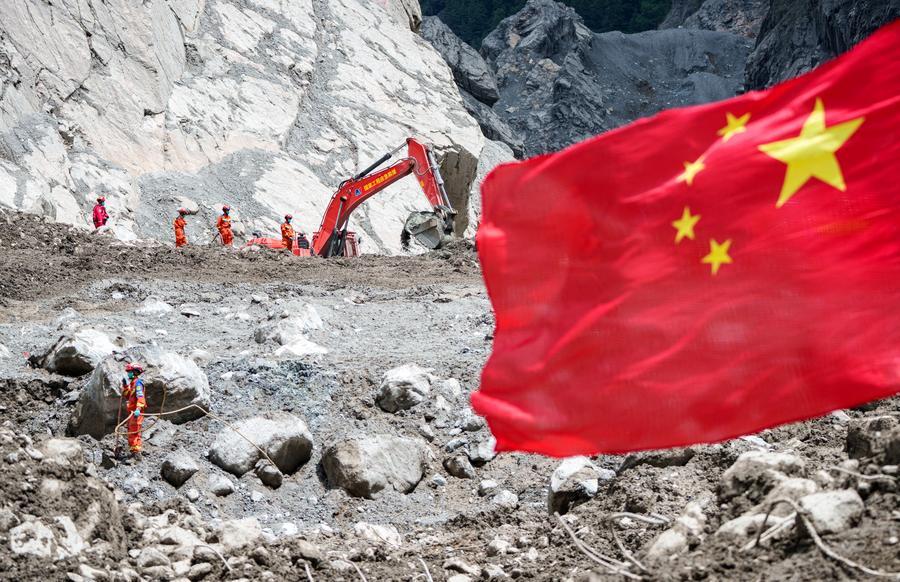
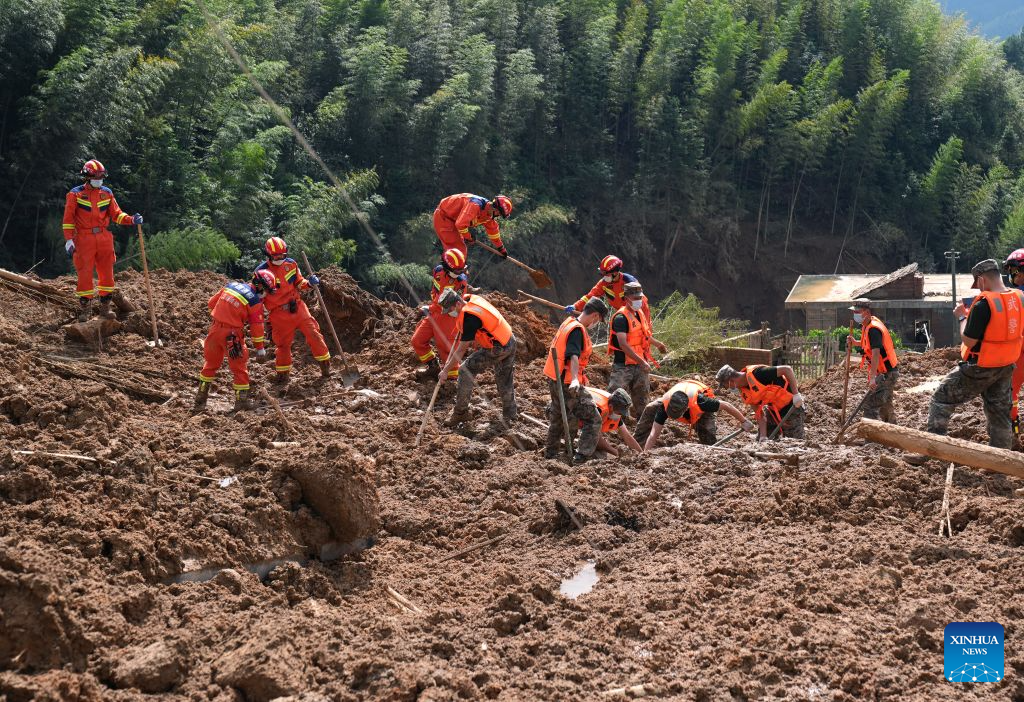
FOCUS | Rescuers make all-out efforts to conduct sweeping search at mudslide-stricken Gyirong Port
Xinhua Headlines: Xi kicks off state visit to Kyrgyzstan, hailing "golden period" of cooperation
Rescuers race against time and odds in search of survivors at mudslide-hit Gyirong Port
China ready to advance hand in hand along path of modernization with Mongolia, says Xi
Xinhua Headlines: Xi calls for SCO to strive for higher quality development, promote better global governance
Xinhua Headlines: Xi calls for deepening China-Egypt cooperation, raises Mideast proposal
Xinhua Headlines: Direct Beijing-Bucharest-Zagreb flight opens new gateway to Central, Eastern Europe
Factbox: Latest relief and rescue progress at mudslide-hit border port in China's Xizang
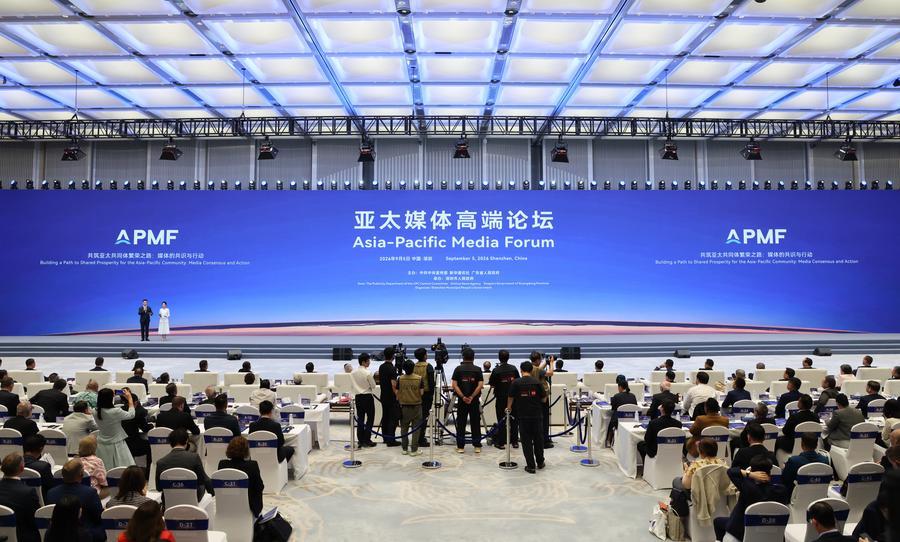
Xinhua Headlines: Asia-Pacific media vow responsibility, champion own voice in AI era

Hong Kong, Macao students interact with Shenzhou-23 crew from orbit during "Tiangong Class"
Xinhua Headlines-Xi Focus: Beyond classrooms: Xi inspires teachers to nurture talent for national rejuvenation

China's AI advances, inclusive governance approach gain global significance, says Polish scholar

MasterOfCrafts | Whispers of Chinese characters on ceramic glaze: A ceramic micro-calligraphy inheritor's story
Xi, Modi conduct in-depth exchange of views, agree China, India should be partners

Xinhua Headlines: Xi urges BRICS to stand on right side of history, play pioneering role







Comments (0)
No comments yet. Be the first to comment!
Leave a Comment