
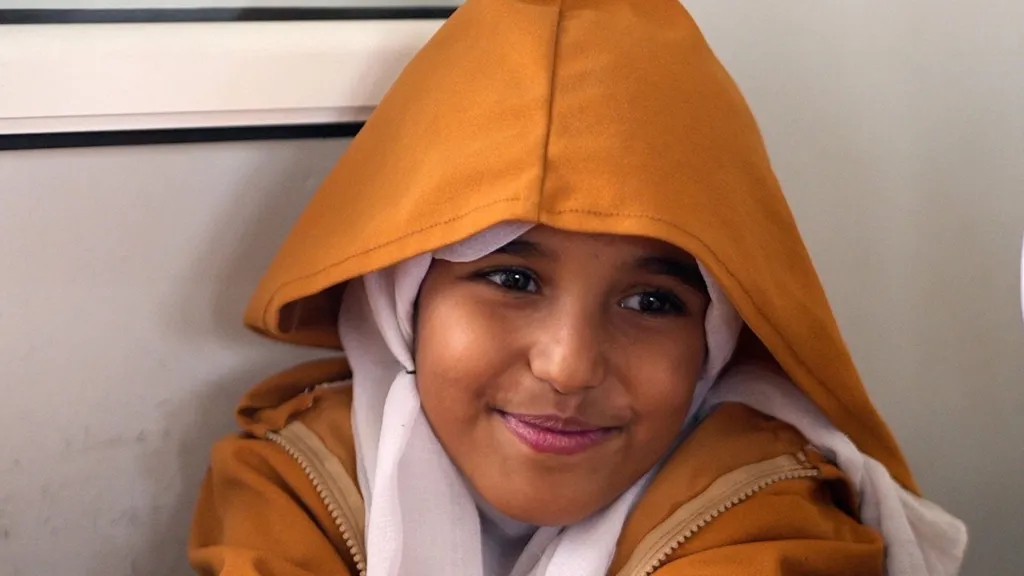
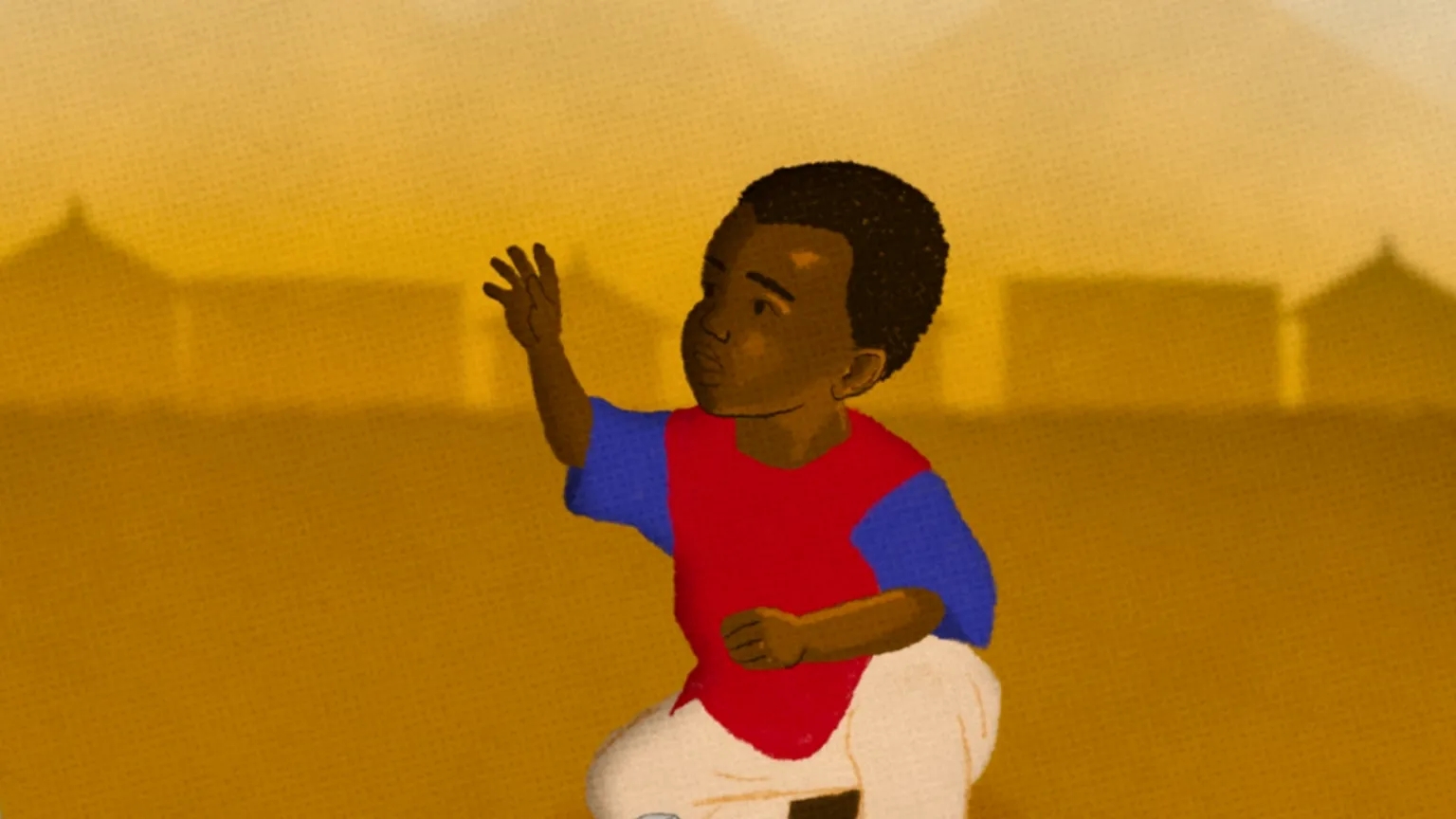
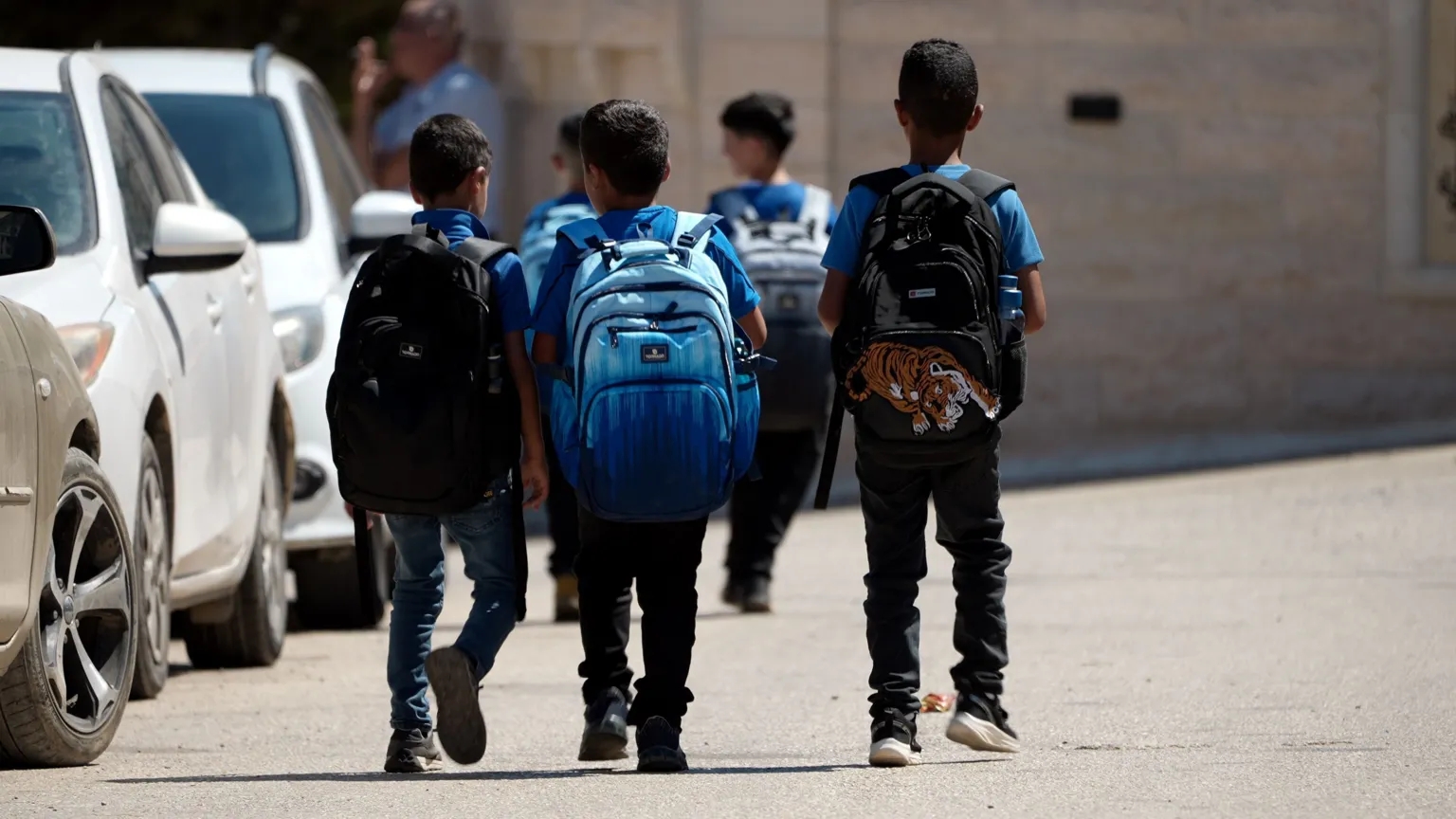
Every morning at 6am, 10-year-old Rafeef and her younger brother get ready for school, putting on their cream and brown uniforms.
She always looks forward to seeing her friends and learning about everything from maths to Arabic and Islamic studies. She can't wait to start studying English next year.
But for Rafeef, the journey to school involves far greater risks than crossing roads or missing the bus.
Her school in Taiz, south-western Yemen, stands on a mountain at the edge of a valley known as no-man's land - a heavily contested front line in the civil war between forces supporting Yemen's internationally recognised government, which is backed by Saudi Arabia, and the Iran-backed Houthis.
On one side of the school is government-held territory, on the other are Houthi sniper positions.
Rafeef's home is further down the mountain.
Every time she goes to school, she has to walk uphill with her back towards the snipers. "I'm afraid," she says.
 Liam Weir / BBC
According to Unicef, roughly 3.2 million children in Yemen were out of school even before the war escalated last month.
It says thousands of children have been killed or maimed since the war began in 2014, while thousands more have been recruited by armed groups on both sides.
Yet despite the risks, Rafeef says she does not want to stop going because she loves seeing her friends and it is her only chance to be with them. She begins naming the children in her classroom.
Going to school is the only time Rafeef's parents let her go outside. They say they are keen for her to get an education and have the chance of a better life. Rafeef hopes to become a doctor.
'A mortar came out of nowhere'
Rafeef's family moved to Taiz from the coastal city of Hudaydah nine years ago, seeking safety when Houthis took control there.
But Taiz has also endured fighting.
Rafeef says that two years ago there was a mortar attack outside her new home.
"Everyone was out except for me and my brother. Then a mortar came out of nowhere… shrapnel blew through the door and into the house." Her arm was broken and there is still a scar where she was hit.
And in recent days the conflict has intensified. On Sunday the Houthis cut off a vital supply route linking Taiz to Aden, which meant they were able to effectively encircle Taiz. Control of that route has kept shifting.
Residents have told the BBC they are afraid the Houthis could seize the city at any moment.
Government forces have made gains in other areas this week, they say, retaking control of strategic points on the Bab al-Mandab Strait - a key shipping chokepoint - and launching an offensive to try to regain control of the capital, Sanaa.
Homes in Taiz are mostly scattered across the slopes, but many have been abandoned by families fleeing the fighting.
Twice, we try to visit the neighbourhood where Rafeef and her family live, but a community leader advises us it is too dangerous.
On the first occasion, residents of the neighbourhood tell us that three people have been shot by snipers. On the second, we are told of another shooting.
At Rafeef's school, one of the teachers, Abdel Raqeeb al-Obaidi, 45, takes us on to the rooftop to show us what he says are Houthi military camps, barracks and sniper positions in the mountains.
Standing on the rooftop, a Yemeni security adviser accompanying us suddenly tells us to go back inside. We are visible from these positions and could be shot, he says.
Abdel Raqeeb laughs, acknowledging the danger. He says the school has been fired on before.
"The situation may explode at any moment while we are sitting in class or sleeping or we are in school or we are out on the street. We do not know how our future is and how tomorrow is."
For Abdel Raqeeb, the risk has become routine. His familiarity with it is unsettling.

Taiz has long been a major battleground in the country's devastating civil war. After ousting the government from the capital Sanaa in 2015, the Houthis attempted to also seize control of Taiz but were driven out of most of the city by local militiamen.
Seizing Taiz would give the Houthis full control over the country's north. Now, in their latest offensive, Houthis are making extensive use of drones alongside other weapons.
Sometimes civilians are collateral damage in the fighting.
Later that evening, we get a call from a hospital about a five minute drive away from the school. Two children have been badly injured by a mortar strike.
When we arrive at Al-Rawdah Hospital, we see a nurse standing outside the intensive care unit, holding a tiny pair of beige, rubber sandals that are splattered with blood.
They belonged to Ahmed, a three-year-old boy who we learn was killed when a mortar struck a mechanic's shop in the city.
 Liam Weir / BBC
Shrapnel in the heart
When I ask about the shoes, the nurse, Ikram Shamsan, begins to cry.
"What did this child or his family ever do wrong?" she asks.
Ahmed was killed when a piece of shrapnel pierced his heart, entering through his back. The boy had been with his father, who was getting his motorcycle tyre pumped up at the mechanic's shop. The father was unharmed.
A doctor tells us the father had intended to leave his son at home, but the boy cried because he wanted to come too.
As he takes his son's body from the hospital, the father asks how he will face the boy's mother.
Completing a simple errand turned into the worst day of their lives.
 Liam Weir / BBC
Another boy, 11-year-old Amjad, was also at the mechanic's shop. He and his brother worked there with their uncle, sending money to their family in their home village.
Shrapnel has struck Amjad in his lung and abdomen. When we reach him, he is in intensive care, struggling to breathe. No relatives are beside his bed.
His doctor describes his condition as critical and fears he could die within hours. He hopes his mother will arrive in time to say goodbye.
Amjad was admitted at about 20:00 that evening. His mother reaches him at around 06:00 the following morning, delayed by the eight-hour journey from the village.
She sits beside his bed and prays, trying to remain composed. Once outside the room, she falls to her knees and breaks down.
Doctors say his heart rate improves during her visit. They judge him stable enough for another operation.
He has since undergone that surgery, but remains critically ill.
"We're always terrified. It's devastating to see children killed," says nurse Shamsan. "We want peace and we want to be safe."
Additional reporting by Jasmin Dyer
SOURCE/AUTHOR : BBC NEWS/
Venues












'I will never let your legacy die' - Charlie Kirk's widow gives tearful address after shooting






One hellscape to another: Gazans tell of dire conditions in Israeli-declared humanitarian zone





Israeli forces near Gaza City centre as Hamas reportedly prepares for street-to-street fighting

















Soldiers threaten to seize state TV in Madagascar, presidency says, amid warnings of coup attempt


Israeli hostages and Palestinian detainees freed as Trump hails 'historic dawn' in Middle East


Israeli military's top lawyer resigns over leak of video allegedly showing abuse of Palestinian detainee







Israeli military's ex-top lawyer arrested over leak of video allegedly showing Palestinian detainee abuse








Bondi gunmen threw explosives at start of attack and practised shooting weeks before, police allege











CJP protest: India's 'Cockroach' protesters have wounds consistent with pellet-gun fire, experts say








Iran says it is in talks with Oman but not the US after Trump says negotiations to resume









Ethiopia's Addis Standard: Editor of top independent news site seized by police, publisher says





























Israel confirms soldiers fired at car in which Hind Rajab was killed and opens criminal investigation





UK, Canada and Australia condemn Israel for refusing criminal probe into aid worker killings in Gaza





Iran faces 'greatest financial offensive ever', says US Treasury Secretary Scott Bessent




Chinese-Eswatini relations: China advises its citizens to leave Taiwan ally over security risks


















Iran says US strike killed four at wedding in 'war crime' as US denies targeting civilians


























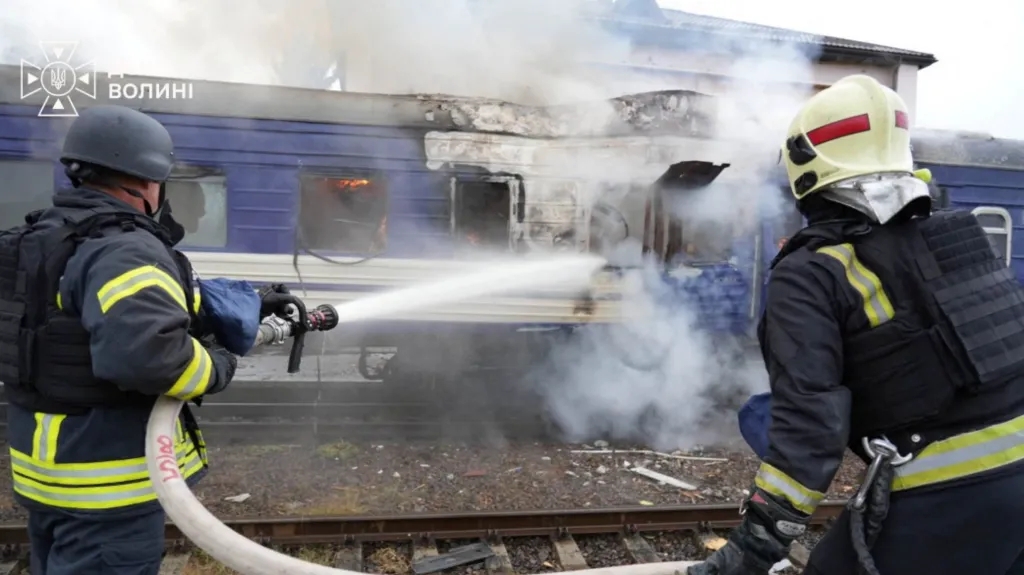
Russia hits Ukrainian train shortly after Boris Johnson and top European officials leave station















German state elections: Chancellor Friedrich Merz vows to stay on despite 'disaster' in polls






Trump threatens to 'annihilate' Iran in UN speech as officials from both countries meet on sidelines






Russia-Ukraine war: Moscow targeting 'ordinary life' with attacks on data centres, Zelensky says























Comments (0)
No comments yet. Be the first to comment!
Leave a Comment